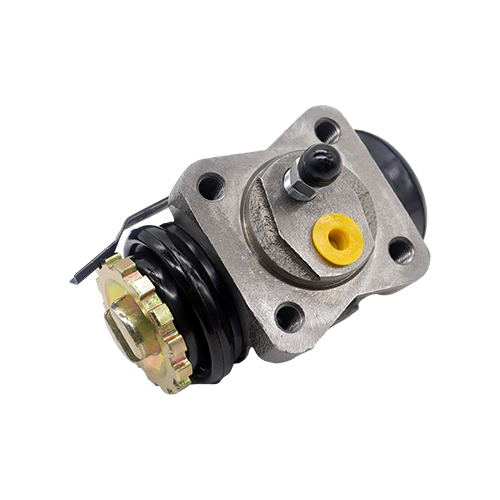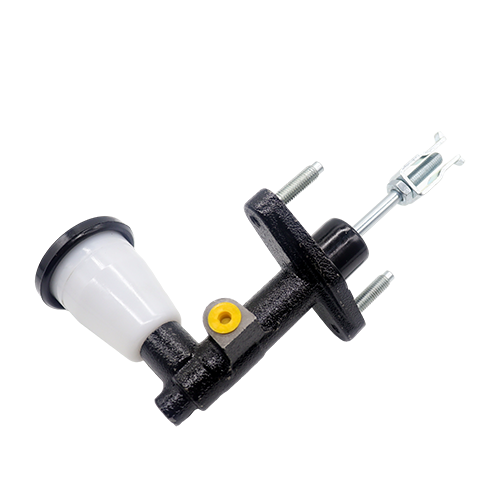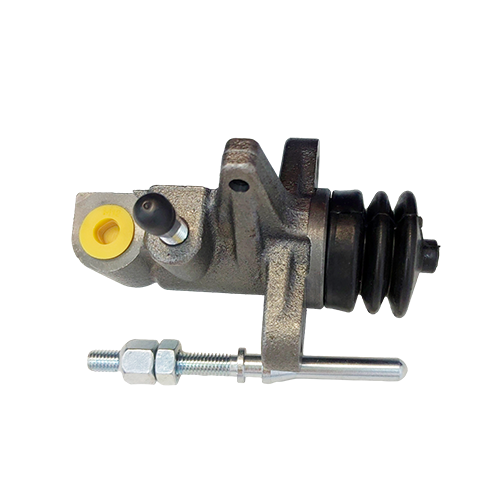
A hydraulic brake transmission system looks simple on a purchase order. It is a handful of line items with bore sizes and port threads. On the road, though, it behaves as one sealed chain of pressure. When a single link stops holding fluid, the whole chain goes down with it. Here is what actually matters before you commit a batch.
A hydraulic brake transmission system is the sealed chain of master cylinder, lines and hoses, and calipers or wheel cylinders that turns pedal force into hydraulic pressure and carries it to the brakes. Its parts never work alone. Each one must hold pressure and return fluid without losing any, which is why one weak link causes total loss of braking rather than a mild drop in performance.
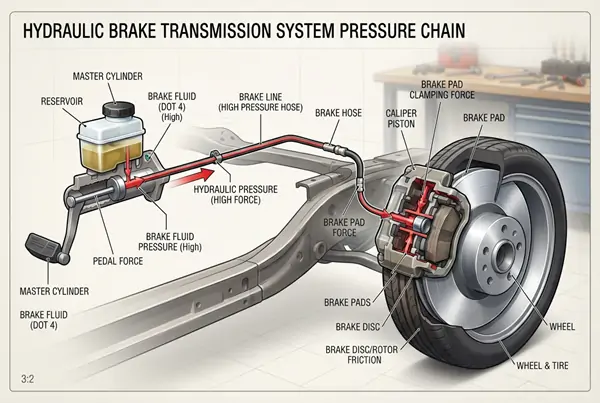
Most sourcing problems I see do not start at the caliper. They start earlier, when a buyer reads a pressure chain as a parts catalogue. Let me walk you through the principles, the components, the specifications that decide real service life, and the failure zones I see most often in returned units.
How Does a Hydraulic Brake Transmission System Actually Work?
Buyers often ask me whether bore diameter and port position are enough to approve a part. They are enough to confirm fitment. They say nothing about whether the system will still hold pressure after two winters of road salt and two summers of heat cycling.
A hydraulic brake transmission system works on one principle: brake fluid is almost incompressible. Force applied at the master cylinder is transmitted through the lines to the caliper or wheel cylinder with very little loss. Pedal force becomes line pressure, and line pressure becomes clamping force at the friction surface.
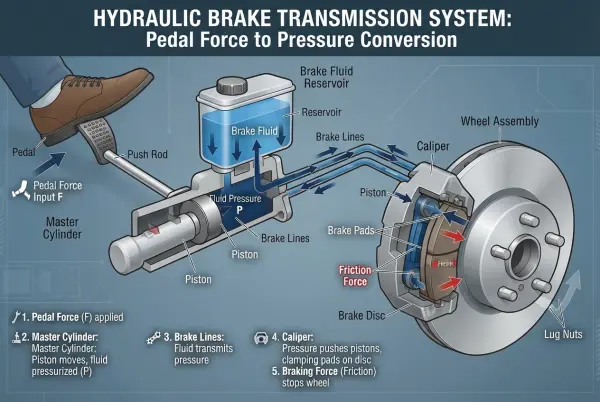
Pressure In, Force Out
The physics is straightforward, and it explains why bore sizing is a fitment question first and a performance question second.
- A master cylinder piston of about 22 mm diameter has a working area near 3.8 cm².
- At roughly 60 bar of line pressure, that area produces a push of about 2,280 N at the caliper piston.
- Under hard braking, line pressure can spike well above 100 bar, and every seal in the chain feels it.
Why the Chain Cannot Be Split
Each link has a job that goes beyond "being on the car":
- The master cylinder creates pressure and must release it completely when the pedal comes up.
- The fluid carries pressure and also carries moisture, which is where long-term trouble starts.
- The hard lines and flexible hoses move that pressure across a chassis that twists and vibrates.
- The caliper or wheel cylinder converts pressure into clamping force and then lets the fluid return.
That last point is the one people miss. A brake part is not only a pressure device. It is also a return device. If a piston cup does not release fluid back to the reservoir, the brakes drag, the fluid overheats, and the part fails early — even though it "fit" perfectly on the bench.
This is why I tell importers that a hydraulic brake transmission system has no minor components. Every link is a load-bearing link.
Which Components Form the Hydraulic Brake Transmission System Chain?
I get sent parts lists with four or five line items and a request for pricing. That is a reasonable start. What those lists rarely show is which link carries the most risk for a specific vehicle mix.
The hydraulic brake transmission system chain has five working links: the master cylinder and reservoir, the brake fluid, the hard lines, the flexible hoses, and the caliper or wheel cylinder at each wheel. Auxiliary items such as proportioning valves, the ABS modulator, and the pedal assembly sit on top of that chain. Our current range covers roughly 98% of European, American, Japanese, and Korean vehicle models across these categories.
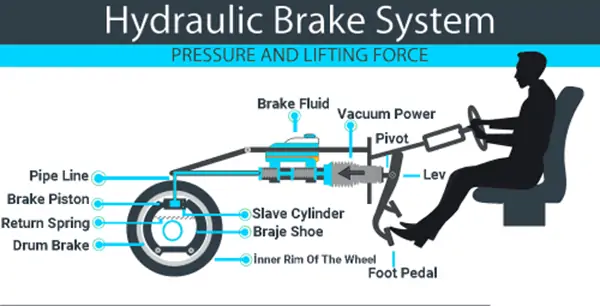
The Five Links and What Fails First in Each
| Link | Main job | What usually fails first |
|---|---|---|
| Master cylinder | Creates pressure and releases it fully | Bore corrosion, cup wear, seal swelling |
| Brake fluid | Transmits pressure, absorbs moisture over time | Water content, contamination |
| Hard lines | Carry pressure along the chassis | External corrosion at clips and bends |
| Flexible hoses | Absorb suspension movement | Inner liner collapse, outer cracking |
| Caliper / wheel cylinder | Convert pressure into clamping force | Piston seizure, dust boot damage |
Types of Hydraulic Circuits You Will Meet
The circuit layout changes what a failure looks like:
- Single-circuit systems appear on older vehicles. One leak means no braking at all.
- Dual-circuit front/rear split is common on light commercial vehicles and older trucks. A rear leak still leaves front braking.
- Diagonal split is standard on most modern passenger cars. Each circuit drives one front and one rear wheel, which keeps the car stable under partial failure.
- Disc versus drum at each corner decides whether you supply a caliper or a wheel cylinder. Many LCVs and light trucks still run drum brakes at the rear, so both part families matter in the same catalogue.
For a private-label programme, these distinctions decide your SKU count more than any marketing decision does.
Which Specifications Decide Whether a Hydraulic Brake Transmission System Part Lasts?
Here is the question that separates a good sourcing decision from an expensive one. Two suppliers can quote the same bore diameter, the same stroke, and the same port thread — and deliver parts with very different service life.
Within a hydraulic brake transmission system, bore diameter, stroke, and port fit are the entry ticket for fitment only. Seal compound, bore material, bore finish, surface treatment, and corrosion protection are what decide whether the part still works after real road cycles. We control those variables under IATF16949 procedures, because they are the ones that generate warranty claims.
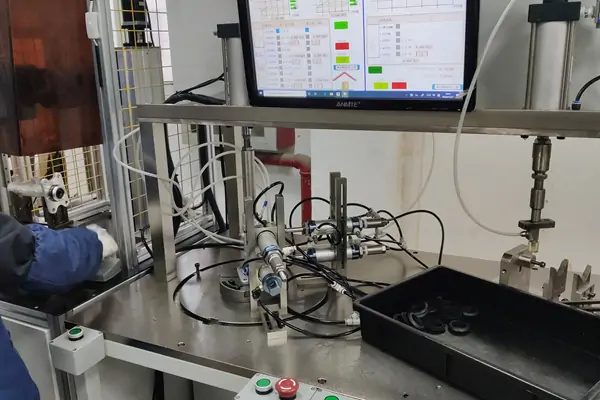
Visible Versus Decisive Parameters
| Parameter | Visible on a drawing? | What it actually decides |
|---|---|---|
| Bore diameter, stroke | Yes | Fitment only |
| Port thread and depth | Yes | Fitment and leak-free assembly |
| Seal compound | Sometimes | Fluid compatibility, swelling, ageing |
| Bore material and finish | Rarely | Seal wear rate, corrosion resistance |
| Plating or surface treatment | Rarely | Pitting resistance over years |
| Dust boot and secondary seal | Rarely | Contamination ingress, piston seizure |
Why the Same Dimensions Give Different Life
Consider two master cylinders with identical nominal specifications:
- One has a roughly honed bore with a controlled crosshatch pattern. The cup keeps a thin fluid film and wears evenly.
- The other has a polished but poorly finished bore. The cup edge wears unevenly, and a leak path opens up sooner.
Then add the seal. Glycol-based fluids such as DOT 3, DOT 4, and DOT 5.1 need EPDM seals. Put the wrong compound in that bore and the cup swells, drags, or breaks down. The part did not fail because it was cheap. It failed because the material was matched to the wrong job.
When you evaluate a supplier, ask for the bore material, the surface treatment, and the seal compound — in writing. A supplier who can only answer with dimensions has told you something important.
Where Does a Hydraulic Brake Transmission System Usually Fail First?
I have spent more than 20 years on the production side, and the returned units we open tell a consistent story. The failure is usually inside the cylinder body, not at the mounting bracket or the port.
Inside a hydraulic brake transmission system, the concentrated failure zone is the cylinder bore and its seals. Bore corrosion, cup ageing, and piston seizure account for most early failures we see. The causes are causal, not random: moisture and contaminated fluid, heat, poor bore finishing or plating, and seal material that does not match the fluid in use.
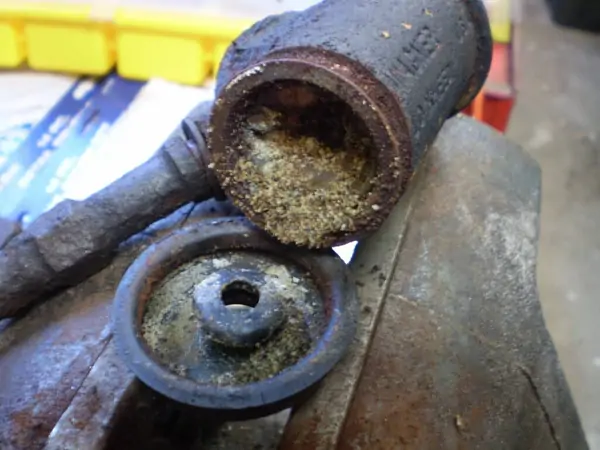
The Four Failure Mechanisms, Explained
- Moisture and fluid contamination. Glycol brake fluid absorbs water from the air, slowly, through hoses and the reservoir cap. That water settles in the lowest point of the bore. It corrodes cast iron, and it boils at a lower temperature than fresh fluid. Pitting then tears the seal lip on every stroke.
- Heat cycling. Calipers and wheel cylinders sit close to the friction surface. Repeated heating and cooling hardens rubber cups over time. A cup that was flexible when new becomes stiff and stops sealing.
- Poor bore finishing or plating. A bore with the wrong crosshatch or an uneven plating layer gives the seal nowhere to run cleanly. Wear becomes local instead of even, and a leak path opens at one spot.
- Wrong seal compound for the fluid. Some fluids, particularly silicone-based DOT 5, are not compatible with the seals used in glycol systems. Mixing them swells or dissolves the cup.
What This Means for a Bulk Order
Two practical points follow from this.
Storage matters. A pallet of wheel cylinders sitting in a humid warehouse for a year can corrode internally before it is ever installed. Ask your supplier how parts are packed, and whether the bore is protected.
Teardown matters. Before you release a container, have a sample unit opened. Check the bore surface, the cup material, and the dust boot. It takes a few minutes and it tells you more than any specification sheet.
How Does a Hydraulic Brake Transmission System Differ from Air and Electronic Braking?
This is the boundary paragraph, and I want to be clear about it. Buyers who source across commercial vehicles and passenger cars sometimes apply one system's logic to another. That is where selection goes wrong.
A hydraulic brake transmission system is not the same as an air brake system or an electronic braking system. Hydraulic systems use nearly incompressible fluid and respond almost instantly to pedal input. Air systems use compressed gas, which is compressible, and they need compressors, reservoirs, and valves. Electronic systems replace fluid or pedal force with actuators and control units.
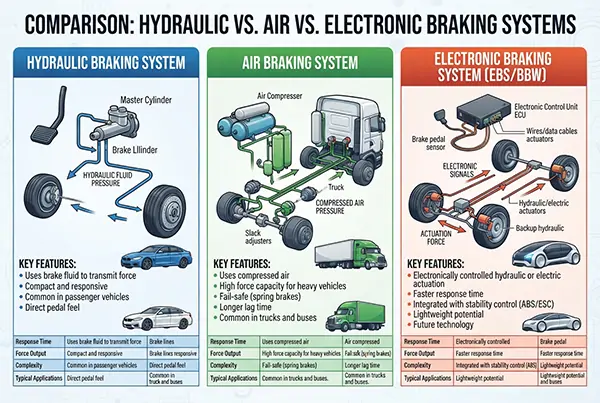
A Simple Comparison
| System | Medium | Typical working pressure | Where you meet it |
|---|---|---|---|
| Hydraulic | Brake fluid | Tens of bar, spiking above 100 bar | Passenger cars, LCVs, most light and medium trucks |
| Air | Compressed air | Roughly 8–10 bar | Heavy trucks, buses, trailers |
| Electro-hydraulic | Fluid, actuated by motor or pump | System dependent | Hybrids, EVs, newer platforms |
| Electromechanical | None, motor at the wheel | System dependent | Emerging platforms |
Where the Boundary Sits for Buyers
- If you supply passenger cars and LCVs, hydraulic is your world. Air brake parts belong to a different catalogue with different standards.
- ABS and stability control are electronic overlays on a hydraulic chain. The hydraulics still do the braking work, so a failing master cylinder or wheel cylinder still matters.
- Electro-hydraulic systems still use fluid, but the pressure source is different. Seal and fluid compatibility questions remain, while pedal-feel and bleeding procedures change.
Do not let "brake equals brake" collapse your selection criteria. The materials and tolerances you approve should follow the system, not the vehicle's badge.
Frequently Asked Questions
What are the main parts of a hydraulic brake transmission system?
The main parts are the master cylinder and reservoir, the brake fluid, the hard lines, the flexible hoses, and the calipers or wheel cylinders at each wheel. Valves, the ABS modulator, and the pedal assembly support that chain. Each part must both hold pressure and allow fluid to return.
Why does a wheel cylinder start leaking?
Most wheel cylinder leaks begin with bore corrosion or a hardened cup. Moisture in the brake fluid settles in the bore, causes pitting, and damages the seal lip. Heat ageing and the wrong seal compound for the fluid make the problem appear sooner.
Can DOT 4 fluid be used in a system designed for DOT 3?
DOT 4 is generally compatible with DOT 3 systems because both are glycol-based, but you should always follow the vehicle manufacturer's specification. Never mix glycol-based fluid with silicone DOT 5, since the seal compounds are different and swelling or seal failure can follow.
How can I check hydraulic brake parts before a bulk order?
Ask for bore material, surface treatment, and seal compound in writing. Then have a sample unit opened and inspected. Check the bore surface for pitting, confirm the cup material, and look at how the parts are packed for humid storage.
Do hydraulic brake parts need different specifications for cold or hot climates?
The parts are largely the same, but fluid choice and storage conditions change. High-humidity regions raise the risk of bore corrosion before installation, and high-temperature regions accelerate cup ageing. Both are worth discussing with your supplier before you commit a batch.
Conclusion
A hydraulic brake transmission system is a pressure chain, not a parts list. The master cylinder, fluid, lines, hoses, and calipers or wheel cylinders each have to hold pressure and return it without loss, so one weak link is a total failure rather than a small downgrade. When you choose a supplier, look past bore diameter and port fit. Ask about bore finish, plating, and seal compound, because those decide whether the part lasts. GDST Auto Parts produces hydraulic cylinders to OEM tolerances under a 1-year or 30,000 km warranty. Send us your vehicle list, and we will help you find the right specification for your market.