When you ask how often clutch slave cylinders should be replaced, you may expect one mileage number, but that number can mislead you. A cylinder can fail early because of leakage, contamination, or incorrect application, while another may remain functional much longer. I recommend a condition-based inspection and evidence-based replacement decision instead of relying on a universal interval.
Clutch slave cylinders do not have one universal replacement mileage. You should replace a cylinder when inspection identifies leakage, seal deterioration, inconsistent clutch operation, corrosion, damage, or an application-related risk. You should also check the vehicle manufacturer’s service guidance, hydraulic system condition, operating environment, and part compatibility. A functioning clutch does not automatically prove that the slave cylinder is healthy.1
I have seen importers and distributors ask for a standard service interval because it would simplify inventory planning and customer advice. However, the practical answer depends on the vehicle, operating conditions, hydraulic design, and evidence from inspection. The following points can help you separate a genuine slave-cylinder problem from other clutch faults and make a more reliable procurement decision.
Why Do Clutch Slave Cylinders Have No Universal Replacement Interval?
A fixed mileage interval sounds convenient, but it can create the wrong expectation. If you stock or recommend a part based only on mileage, you may overlook vehicles with severe operating conditions or replace sound components unnecessarily. I treat service life as a risk question influenced by several interacting factors.
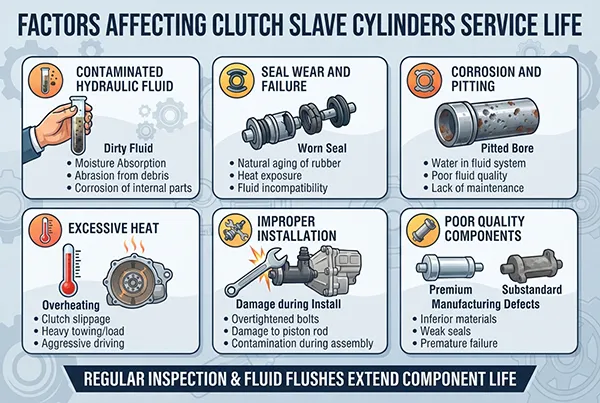
Clutch slave cylinders have no universal replacement interval because their service life depends on vehicle design, hydraulic-system condition, driving conditions, environmental exposure, part quality, and maintenance history. The safest approach combines manufacturer guidance with inspection findings, leakage checks, pedal symptoms, and verified OE application data.
What Changes the Service Life?
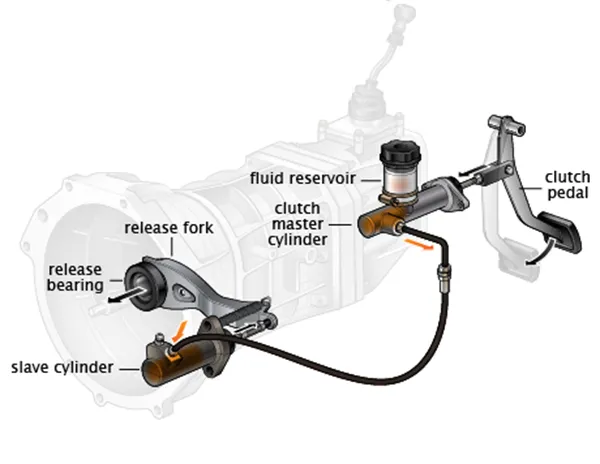
A slave cylinder works as part of a hydraulic system. The component does not operate in isolation. The master cylinder, hydraulic fluid, hose or pipe, seals, clutch release mechanism, and friction assembly can all affect how the system behaves.
Important variables include:
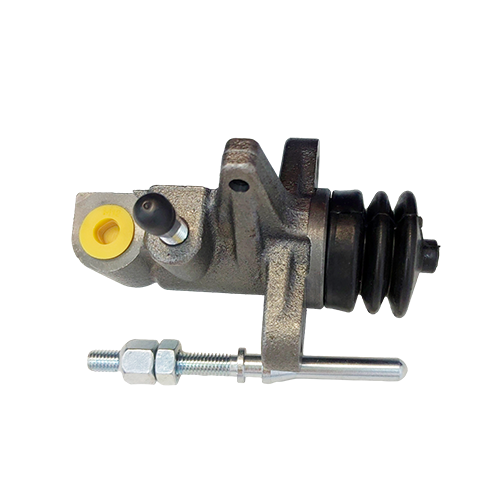
- Vehicle design: Some vehicles use concentric slave cylinders inside the bell housing, while others use externally mounted designs.2
- Operating environment: Heat, dust, water, road salt, and corrosion can affect external surfaces and seals.3
- Driving pattern: Stop-and-go traffic, frequent loading, towing, hill starts, and commercial fleet use can increase clutch actuation frequency.
- Hydraulic-fluid condition: Incorrect, contaminated, or moisture-affected fluid can harm seals and reduce system reliability.
- Installation quality: Misalignment, damaged connections, trapped air, or incorrect bleeding can create symptoms that resemble part failure.
- Replacement-part quality: Dimensional accuracy, sealing performance, material selection, and process control influence suitability.
I often remind buyers that a mileage figure describes distance traveled, not the number of clutch engagements or the conditions under which those engagements occurred. A delivery van operating in urban traffic may use its clutch far more frequently than a passenger car covering the same distance on open roads.4
Why Does the Mileage Question Mislead Buyers?
Many buyers want a simple answer such as “replace the cylinder every 80,000 kilometers.” I understand the commercial reason. A fixed number helps distributors plan stock and helps workshops quote customers. However, unless that figure comes from a specific vehicle manufacturer or verified field data, it should not be presented as a technical rule.
A vehicle can show no obvious problem at a particular mileage, while another vehicle can develop leakage much earlier. Conversely, replacing every cylinder at the same mileage may increase cost and waste if there are no inspection findings.
For procurement, I suggest recording:
- The vehicle make, model, engine, transmission, and production year.
- The original equipment or cross-reference number.
- The mounting arrangement and hydraulic connection type.
- The vehicle’s operating environment and usage pattern.
- The inspection findings that justify replacement.
- Any relevant manufacturer service information.
This approach gives you a defensible decision rather than an unsupported promise. I would verify any model-specific service interval against the OEM workshop manual, authorized service data, or credible fleet evidence. I would not use a general internet recommendation as proof of a universal replacement schedule.
Should You Inspect Clutch Slave Cylinders Even If the Clutch Still Works?
A functioning clutch can hide a developing hydraulic problem. You may still be able to select gears, but a changing pedal feel, slow fluid loss, or intermittent release can indicate that the system needs attention. Waiting for complete failure can create a more difficult repair, especially for commercial vehicles or vehicles with difficult access.
You should inspect clutch slave cylinders even when the clutch still operates normally if you notice fluid loss, a soft or inconsistent pedal, difficult gear engagement, incomplete clutch release, or visible corrosion. Routine inspection is especially important during related clutch or hydraulic repairs.
Which Symptoms Should Prompt Inspection?
I have reviewed anonymized customer descriptions where the driver said, “The clutch still works, but the pedal feels different.” That statement should not be dismissed. A hydraulic component can lose sealing performance gradually before it creates a complete loss of clutch operation.
You should encourage inspection when you observe:
- A soft, spongy, or sinking clutch pedal.
- A pedal that returns slowly or inconsistently.
- Increasing difficulty selecting first gear or reverse.
- Grinding during gear engagement.
- A clutch that does not fully release.
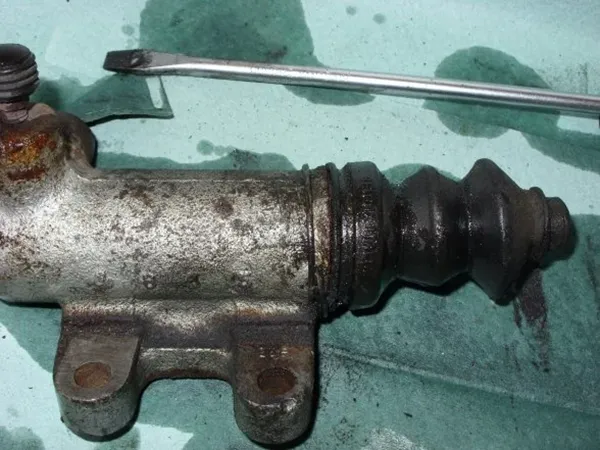
- Hydraulic fluid around the slave cylinder, pushrod, boot, hose, or connection.
- Repeated need to bleed the hydraulic system.5
- A change in pedal travel after the vehicle becomes hot.
- Visible corrosion, physical damage, or deformation.
- A sudden loss of clutch operation.
These symptoms do not prove that the slave cylinder is defective. They indicate that diagnosis is necessary.
What Should a Basic Inspection Cover?
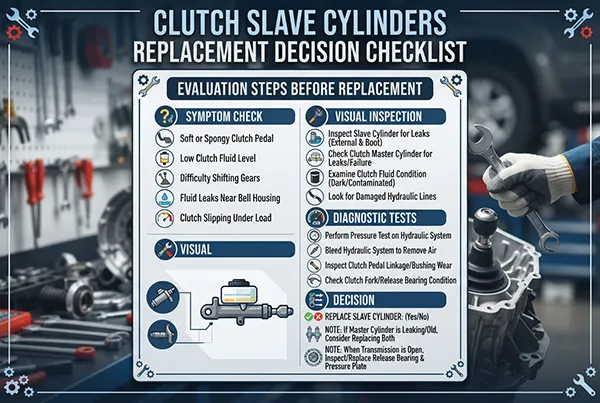
A qualified technician should inspect the complete hydraulic and clutch-release system. The inspection may include:
| Inspection area | What the technician may check | Why it matters |
|---|---|---|
| Fluid reservoir | Level, contamination, and correct fluid type | Low or contaminated fluid can indicate a wider system issue |
| Hydraulic lines | Cracks, swelling, abrasion, and leaks | A damaged hose can imitate cylinder failure |
| Slave cylinder | External leakage, corrosion, boot condition, and movement | These findings may support replacement |
| Master cylinder | Internal bypass and fluid loss | The master cylinder can cause similar pedal symptoms |
| Bleeding condition | Air in the system and correct bleeding procedure | Air can create a soft pedal without a failed cylinder |
| Release mechanism | Fork, pivot, bearing, and guide condition | Mechanical faults can prevent full release |
| Friction assembly | Disc, pressure plate, and flywheel condition | Slipping or dragging may come from clutch components |
I recommend that buyers and distributors avoid diagnosing from one symptom alone. A soft pedal may result from air, a damaged hose, a master-cylinder fault, or a slave-cylinder seal problem. A difficult gear change may result from incomplete hydraulic travel, linkage issues, synchronizer wear, or clutch friction-part problems.
The correct replacement decision starts with system evidence. When the cylinder is difficult to access, the workshop should also consider the labor implications of replacing it during an already planned clutch repair. That is a vehicle-specific service decision, not a universal rule for every application.
Is a Clutch Slave Cylinder Fault the Same as Clutch Wear?
The terms “clutch problem” and “slave-cylinder problem” are often used interchangeably, but they describe different components. If you replace the wrong part, the original symptom may remain. You may also create unnecessary returns, installation disputes, and customer dissatisfaction.
A clutch slave cylinder fault is not the same as wear in the clutch disc, pressure plate, release bearing, or flywheel. Hydraulic symptoms often involve leakage or inconsistent actuation, while friction-part problems can involve slipping, vibration, noise, or poor torque transfer. A complete diagnosis should separate these possibilities before replacement.
How Can You Distinguish Common Fault Patterns?
The symptoms can overlap, so I would use the following patterns only as initial guidance. A qualified technician should confirm the cause.
| Observed symptom | Possible causes | Does it prove slave-cylinder failure? |
|---|---|---|
| Clutch slips under acceleration | Worn or contaminated clutch disc, weak pressure plate, oil contamination | No |
| Gear selection is difficult | Incomplete release, hydraulic fault, linkage issue, synchronizer wear | No |
| Pedal feels soft | Air, hydraulic leak, master cylinder, slave cylinder, hose | No |
| Pedal stays down | Hydraulic failure, return problem, release mechanism fault | No |
| Noise while pressing pedal | Release bearing, guide, pressure plate, or hydraulic-related movement | No |
| Visible fluid near slave cylinder | Seal failure, connection leak, line damage, or spilled fluid | Strong reason for inspection |
| Clutch grabs or shudders | Friction surface, flywheel, mounting, contamination, or release issue | No |
A slipping clutch usually points toward a torque-transfer problem.6 The disc may be worn or contaminated, or the pressure plate may not provide enough clamping force. A slave cylinder can contribute if it prevents correct release or leaves the clutch partially actuated, but I would not assume that every slipping clutch needs a new hydraulic cylinder.
A dragging clutch behaves differently. The clutch may not disengage fully, which can make gear selection difficult. Hydraulic travel, air in the system, a damaged release fork, incorrect adjustment, or internal clutch damage can all contribute.
Why Does Diagnosis Matter for Parts Buyers?
B2B buyers often receive incomplete information from downstream customers. A request may say “need clutch cylinder for hard shifting,” but that description may not identify the actual failed component. If you buy only according to the symptom, you increase the risk of supplying a technically unsuitable solution.
I suggest asking for:
- The vehicle identification details.
- The original part number and supplier reference.
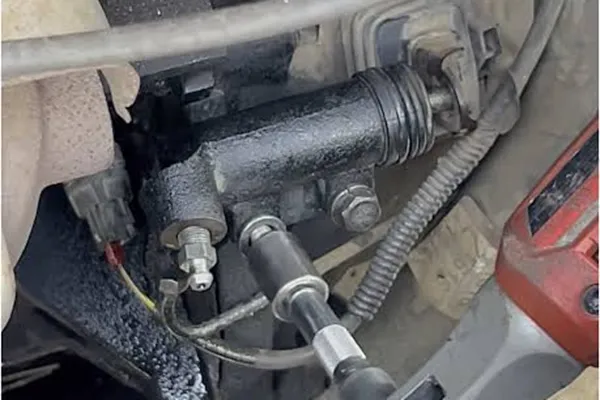
- Photographs of the installed component and mounting points.
- The reported symptoms and when they occur.
- Any leakage or fluid evidence.
- Whether the system was recently opened or repaired.
- The results of bleeding and hydraulic checks.
- Whether the clutch assembly has also been inspected.
This information improves catalog accuracy and reduces avoidable returns. It also helps you decide whether to stock a slave cylinder, a master cylinder, a clutch kit, or several related components.
I have seen cases where a buyer assumed continued clutch operation meant the cylinder was healthy. I have also seen the opposite situation, where a workshop replaced the cylinder for a slipping complaint but later found a worn friction disc. These examples show why part selection should follow diagnosis rather than replace it.
How Should You Evaluate a Replacement Clutch Slave Cylinder?
Once inspection supports replacement, the next question is not simply how long the new part will last. You also need to know whether the part is correctly designed for the vehicle and whether the supplier can provide reliable evidence of manufacturing control.
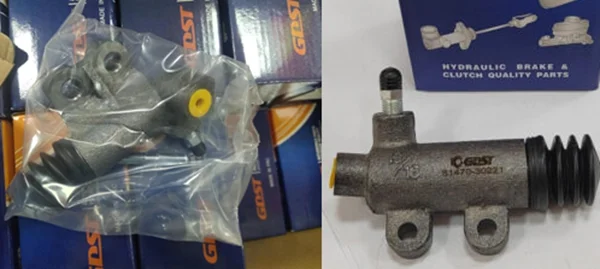
You should evaluate a replacement clutch slave cylinder through verified OE compatibility, dimensional accuracy, sealing performance, material and process information, application coverage, installation requirements, warranty terms, and supplier traceability. You should request documents and test evidence rather than relying only on broad durability claims.
Which Technical Details Should You Verify?
I recommend that sourcing teams use a documented approval checklist. The exact requirements will vary by application, but the following points provide a useful starting point:
-
Application accuracy
Confirm the vehicle model, engine, transmission, production range, and OE reference. Some vehicles have variations that look similar but use different mounting or hydraulic connections. -
Dimensional conformity
Check mounting-hole position, body dimensions, pushrod length, bore specification where available, port location, and connector design. A small dimensional difference can affect clutch travel or installation. -
Sealing and materials
Ask what evidence supports seal compatibility with the specified hydraulic fluid and operating temperature range. The supplier should avoid vague statements such as “premium rubber” without technical context. -
Manufacturing control
Review inspection procedures, traceability, process controls, and relevant quality documentation. Certifications should be treated as documents for buyer verification, not as automatic proof that every individual part is suitable. -
Testing evidence
Request applicable pressure, leakage, dimensional, and functional test records. The test method should be clear enough for you to understand what the evidence demonstrates. -
Installation support
Confirm bleeding guidance, fluid requirements, torque information, and whether any special tools or procedures apply. -
Warranty and claim handling
Verify the warranty period, coverage conditions, exclusions, and evidence required for a claim. A warranty does not replace correct application and installation.
How Can Supplier Evidence Reduce Procurement Risk?
A supplier should be able to explain how it controls critical characteristics. In my own manufacturing context, I focus on the relationship between product design, material selection, machining accuracy, seal installation, inspection, and application data. A part that looks similar externally may still perform differently if its internal dimensions or sealing details do not match the OE requirement.
For a B2B importer or distributor, useful supplier evidence may include:
- An application catalog linked to OE references.
- Technical drawings or controlled dimensional data.
- Batch or production traceability.
- Incoming-material and process inspection records.
- Leakage or pressure-test records where applicable.
- Packaging and identification controls.
- A documented nonconformity and replacement process.
- Verified quality-system documentation.
I would not treat an IATF 16949 reference, a warranty statement, or a general “long service life” claim as independent proof of field performance. Those materials can support supplier evaluation, but you should still verify application fit and request evidence relevant to the part.
At GDST, our experience in brake and clutch hydraulic manufacturing helps us understand why vehicle coverage and accurate cross-referencing matter to aftermarket buyers. However, I still recommend qualified professional evaluation for application-specific decisions. No supplier catalog can replace a technician’s inspection of the vehicle or an importer’s verification of the intended market.
When Is Replacement More Appropriate Than Continued Monitoring?
Monitoring can be reasonable when inspection finds no leak, no abnormal movement, no corrosion, and no inconsistent operation. However, continued use becomes a higher-risk decision when symptoms are progressing or when failure would create significant downtime.
Replacement is more appropriate when the slave cylinder shows confirmed leakage, damaged seals or boots, corrosion that affects function, inconsistent hydraulic movement, physical damage, or incorrect application. Replacement may also be considered during related clutch work when access is difficult, but the decision should follow vehicle-specific service guidance and professional judgment.
How Should Fleet and Aftermarket Buyers Manage Risk?
A fleet operator may value preventive replacement differently from a private vehicle owner. A failed cylinder on a delivery truck can cause roadside downtime, missed routes, towing costs, and customer disruption. A private owner may choose to monitor a component more closely if inspection shows no defect.
I would assess three questions:
- What evidence shows that failure is developing?
- What is the consequence if the part fails in service?
- What is the cost and accessibility of replacement?
A concentric slave cylinder located inside the bell housing may require substantial labor to access. An external slave cylinder may be easier to replace, but its failure can still leave the vehicle unusable. These factors influence preventive maintenance, but they do not create one universal mileage rule.
For distributors, risk management also includes inventory planning. You can reduce confusion by grouping products according to verified applications rather than using one generic “fits many vehicles” description. You can also train customers to report symptoms and provide OE references before ordering.
I find that this approach improves conversations. Instead of promising a specific lifespan, I can explain what buyers should inspect, what evidence they should request, and what conditions may justify replacement. That is more honest and more useful for professional procurement.
Frequently Asked Questions
How many miles do clutch slave cylinders usually last?
There is no dependable universal mileage figure for all clutch slave cylinders. Service life varies with vehicle design, traffic conditions, climate, hydraulic-fluid condition, installation quality, and part quality. You should use vehicle-specific service information and inspection findings instead of treating a general mileage estimate as a replacement rule.
Can a clutch slave cylinder fail without visible fluid?
Yes. A slave cylinder may develop internal seal bypass, inconsistent movement, or gradual performance loss without an obvious external leak. You may notice a soft pedal, incomplete clutch release, or changing pedal behavior first. A qualified technician should inspect the complete hydraulic system before identifying the failed component.
Should I replace the clutch slave cylinder when replacing the clutch kit?
The answer depends on the vehicle design, access difficulty, inspection results, and manufacturer or technician guidance. Some workshops consider replacing an accessible or internally mounted cylinder during clutch work to reduce future labor risk. You should confirm the correct application and discuss the decision with a qualified technician.
Can a bad master cylinder feel like a bad slave cylinder?
Yes. Both hydraulic cylinders can cause soft pedal operation, incomplete clutch release, or loss of pressure. A damaged hose, air in the system, or incorrect fluid can create similar symptoms. Diagnosis should include the reservoir, lines, master cylinder, slave cylinder, bleeding condition, and mechanical release components.
What should I ask a clutch slave cylinder supplier?
You should ask for OE references, application coverage, dimensional information, seal and fluid compatibility details, quality documentation, relevant test evidence, traceability, installation guidance, and warranty terms. You should also verify that the supplier can manage technical questions and claims without relying only on a generic catalog description.
Conclusion
The answer to “how often should clutch slave cylinders be replaced?” is condition-based rather than universal. You should not rely on one mileage figure or assume that a working clutch proves the cylinder is healthy. Instead, check symptoms, leakage, hydraulic condition, mechanical release components, and vehicle-specific service information. As a buyer, verify OE compatibility, dimensions, sealing evidence, supplier controls, and warranty terms. If you need application support or verified brake and clutch hydraulic parts, contact GDST with the vehicle and OE details so we can help you evaluate the correct replacement.
"Clutch Problems, Troubleshooting, and Service Technical Terms", https://www.academia.edu/31464556/Clutch_Problems_Troubleshooting_and_Service_Technical_Terms. Engineering analyses of hydraulic clutch systems describe how internal leakage or declining seal performance can reduce actuator travel and alter pedal behavior before the system loses all clutch function. Evidence role: mechanism; source type: paper. Supports: A hydraulics or automotive engineering source should explain how internal leakage, seal bypass, or reduced hydraulic displacement can impair clutch actuation before complete loss of operation.. Scope note: The mechanism is applicable in principle, but the observable symptoms and failure progression vary with cylinder design and vehicle system architecture. ↩
"(DOC) CBLM(RAV) AS Service Clutch System - Academia.edu", https://www.academia.edu/33530471/CBLM_RAV_AS_Service_Clutch_System. Automotive technical references distinguish concentric slave cylinders, which combine the actuator with the release-bearing assembly within the bell-housing area, from externally mounted slave-cylinder designs. Evidence role: definition; source type: encyclopedia. Supports: An automotive reference should define concentric slave cylinders and distinguish them from externally mounted slave-cylinder arrangements.. Scope note: The classification does not by itself indicate which arrangement is used on a particular vehicle or whether one design is inherently more durable. ↩
"[PDF] memorandum - NASA Technical Reports Server", https://ntrs.nasa.gov/api/citations/19750005033/downloads/19750005033.pdf. Materials research shows that thermal, moisture, salt, and contaminant exposure can promote corrosion or alter elastomer properties, providing a mechanism by which harsh environments may reduce hydraulic-component reliability. Evidence role: mechanism; source type: paper. Supports: A materials or corrosion study should document how temperature, moisture, salts, contaminants, and chemical exposure can affect metallic components and elastomeric seals.. Scope note: General materials evidence may not reproduce the exact fluid, temperature, geometry, or exposure conditions of a particular clutch slave cylinder. ↩
"[PDF] Quantifying the Effects of Idle-Stop Systems on Fuel Economy in Light", https://www.energy.gov/sites/prod/files/2014/02/f8/idle-stop_light_duty_passenger_vehicles.pdf. Transport duty-cycle data indicate that urban delivery routes involve more frequent stops and starts than open-road travel, so equal odometer mileage can represent different levels of clutch-actuation demand. Evidence role: statistic; source type: government. Supports: A transport duty-cycle dataset should compare stop frequency, starts, gradients, and operating patterns for urban delivery vehicles and open-road passenger vehicles.. Scope note: Route composition and driver behavior vary widely, and duty-cycle data do not directly measure slave-cylinder service life. ↩
"9+ Easy How to Bleed Clutch Steps (DIY Guide)", https://bigblue.atlantisuniversity.edu/how-to-bleed-clutch/. Hydraulic-system troubleshooting guidance treats recurring air or repeated loss of pedal firmness after bleeding as evidence requiring investigation of leakage, connections, component seals, or bleeding procedure. Evidence role: mechanism; source type: education. Supports: A hydraulic-system troubleshooting source should explain that recurring air after bleeding commonly warrants checks for leaks, seal failure, loose connections, hose damage, or improper bleeding.. Scope note: Improper bleeding technique can produce similar symptoms, so repeated bleeding does not by itself establish a failed slave cylinder. ↩
"Clutch Problems, Troubleshooting, and Service Technical Terms", https://www.academia.edu/31464556/Clutch_Problems_Troubleshooting_and_Service_Technical_Terms. Clutch-system analyses describe slipping as insufficient frictional torque capacity between the disc and mating surfaces, distinguishing it from incomplete release caused by hydraulic or release-mechanism faults. Evidence role: mechanism; source type: paper. Supports: A clutch engineering source should explain that slipping occurs when transmitted torque exceeds the friction assembly's available capacity, commonly involving disc wear or contamination, pressure-plate force, or related conditions.. Scope note: A hydraulic fault that holds the clutch partially disengaged can contribute to slipping, so the symptom remains insufficient to identify one component. ↩