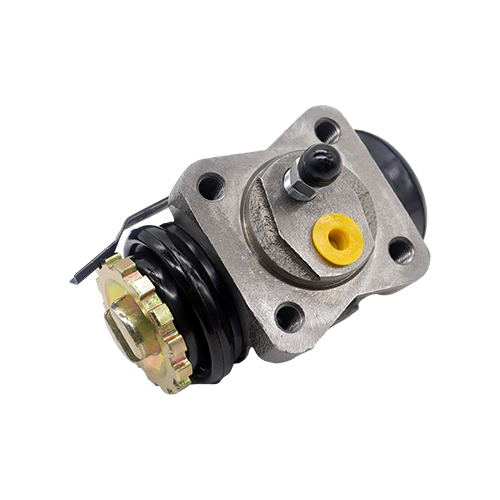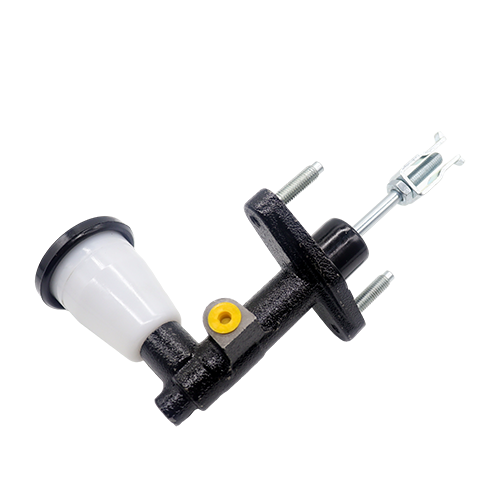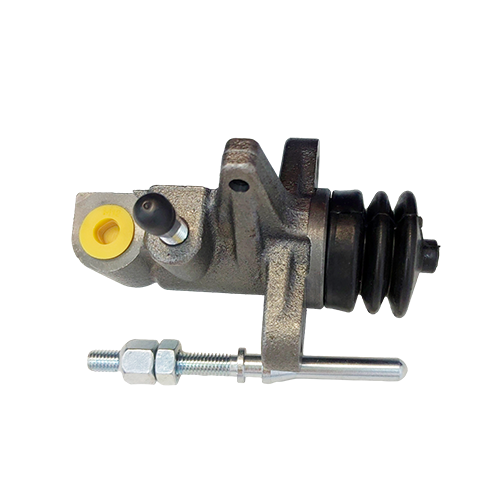
A clutch master cylinder that fails internally gives you a soft or slowly returning pedal — with no fluid on the ground. That is the problem. The symptoms look almost exactly like a worn clutch disc or release bearing, so the clutch kit gets replaced first and the fault is still there. This guide gives you the diagnostic order that avoids that.
A clutch master cylinder is the hydraulic pump that turns clutch pedal travel into fluid pressure, which the slave cylinder converts into the movement that disengages the clutch. You replace it when an ordered diagnosis confirms seal failure, bore wear or housing damage — not at a set mileage, and not simply because the pedal feels soft.
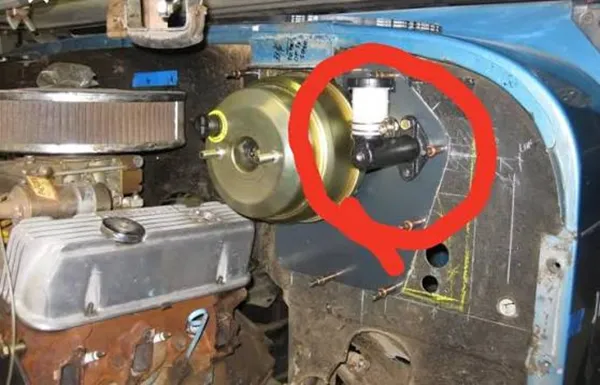
So how do you get from "the pedal feels wrong" to "this part is the cause"? Start with what the part does, then test in a fixed order. That order is what saves you from a comeback.
What Is a Clutch Master Cylinder and What Does It Do?
You press the pedal, the clutch should release, and none of it feels complicated. Yet when release gets vague, most people start guessing at the clutch itself. The master cylinder is usually checked last — and it is the cheapest part on the list to check.
A clutch master cylinder is a small piston pump mounted on the firewall or pedal box. It holds hydraulic fluid in a reservoir and pushes that fluid down a line to the slave cylinder, which moves the release fork or the concentric release bearing.
How the hydraulic clutch system works
The system is simple, and that simplicity is exactly why diagnosis is possible.
- Reservoir: stores fluid and feeds the bore. On many vehicles it shares a reservoir with the brake system, which is one reason the two parts get confused.
- Bore and piston: the piston travels a fixed stroke. Fluid does not compress, so almost all of that stroke transfers down the line.
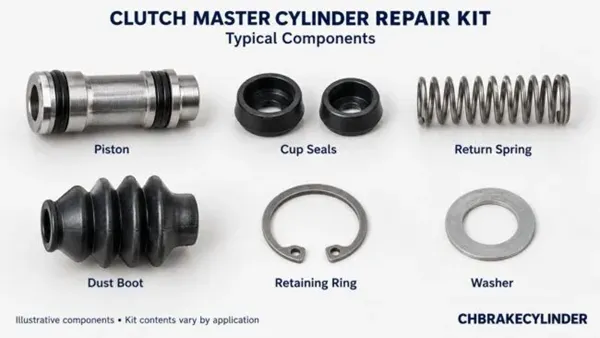
- Primary cup seal: the working seal. In most failed units, this is the part that decides whether the vehicle still drives properly.
- Secondary seal and dust boot: the secondary seal keeps fluid off the back of the piston; the boot keeps dust and moisture out of the bore.
- Outlet port and line: carries pressure to the slave cylinder.
When you release the pedal, a return spring and the slave cylinder push fluid back, and a small compensating port lets the system self-adjust as the clutch wears.
Two details matter later. First, the master cylinder makes pressure only during the pedal stroke — it is not a constant-pressure device. Second, most of the travel you feel is displaced fluid, not clutch movement. That is why a hydraulic fault can imitate a mechanical one so convincingly.
Clutch master cylinder vs brake master cylinder
These parts often sit a few centimetres apart, use the same fluid, and appear on the same catalogue page. They are not interchangeable.
| Point of comparison | Clutch master cylinder | Brake master cylinder |
|---|---|---|
| Job | Disengages the clutch via the slave cylinder | Applies braking force through a split circuit |
| Circuit layout | Single circuit, one outlet | Dual or split circuit with redundancy |
| Duty cycle | Lower pressure, short repeated strokes | Higher pressure, longer strokes, safety-critical duty |
| Internal design | Simple piston and cup seal, small bore | Often tandem pistons, stepped bore, additional valves |
| Specification logic | Matched to pedal ratio, slave bore and release travel | Matched to caliper or wheel cylinder volume |
| Buying consequence | Wrong bore changes release point and pedal feel | Wrong unit affects braking balance |
The practical point for a buyer: do not select a clutch unit using brake-part criteria such as "same thread, same reservoir, looks the same." Clutch release behaviour depends on the bore relationship between the master and the slave cylinder. Fit a unit with the wrong bore, or a generic one that only matches the mounting, and your customer gets a pedal that bites at the floor or feels like an on/off switch. That is why clutch units should be built to per-vehicle OEM tolerances instead of a "close enough" window.
What Symptoms Point to a Failing Clutch Master Cylinder?
A soft pedal, a pedal that sinks, a clutch that bites near the floor — you might assume the clutch is finished. Before you quote a clutch job, look at what the symptoms are actually telling you, because they point in more than one direction.
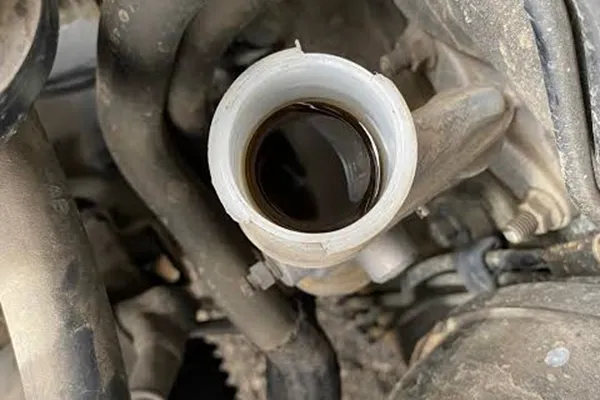
The common symptoms of a clutch master cylinder fault are a spongy or soft pedal, a pedal that sinks slowly while held down, slow pedal return, a biting point that creeps toward the floor over weeks, and dark gritty fluid in the reservoir. Fluid loss with a wet pedal box or bell housing points to an external leak.
What each symptom usually means
- Pedal sinks slowly while you hold it down: fluid is bypassing the primary cup. This is the classic internal leak, and you will see no fluid anywhere.
- Pedal is soft or spongy: pressure loss or air in the system. Both feel similar, which is why bleeding comes before replacement.
- Pedal returns slowly or stays low: restricted return flow, or a piston sticking in a scored bore.
- Biting point moving toward the floor over weeks: progressive seal wear or a slow internal leak.
- Pedal feels normal but gears crunch: could be a short hydraulic stroke, or a mechanical release problem such as a bent fork or a worn release bearing.
- Fluid level dropping with a wet pedal box or bell housing: external leak. Easier to find, but not automatically the master cylinder — the slave cylinder and line are candidates too.
- Dark, gritty fluid: rubber debris and sludge from degrading seals. If you leave it in, a new unit can fail early.
Now the part most buyers and technicians skip: none of these symptoms proves the master cylinder is the failed part. A worn release bearing, a bent release fork, a cracked pivot, a swelling flexible hose, or simple air in the line can produce the same feedback from the driver's seat. Treat every symptom as a candidate cause, not a verdict. On vehicles with a shared brake and clutch reservoir, a falling fluid level also has to be assessed by a qualified technician before anything is ordered.
Is a Soft Clutch Pedal Always a Clutch Master Cylinder Failure?
Your customer says the clutch is slipping, the pedal is soft, and they want it sorted today. Guessing here is expensive — a clutch job that does not fix the complaint is the worst outcome. Work the checks in order and let the results decide.
No, a soft pedal is not automatically a clutch master cylinder failure. The most common candidates are an internal master cylinder leak, air in the hydraulic circuit, a failing slave cylinder, and mechanical wear in the pressure plate, disc or release mechanism. Check them in that order, because the cheap checks come first.
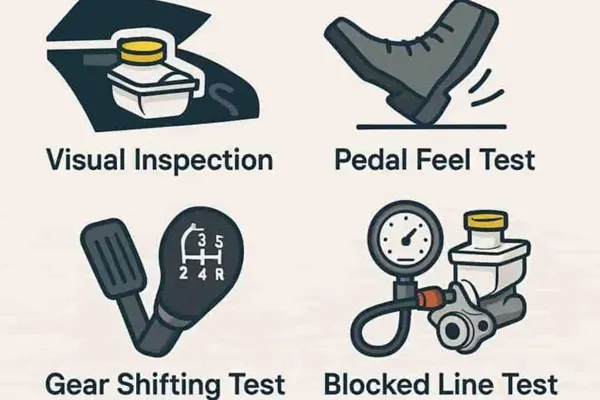
The order that keeps you out of trouble
| Step | Check | What it tells you |
|---|---|---|
| 1 | Fluid level and condition | External leak, or contaminated fluid that will damage new parts |
| 2 | Visual inspection of master, line and slave | Finds external leaks before you go further |
| 3 | Bleed the circuit properly and re-test | Removes air as a cause; a soft pedal that improves means air was involved |
| 4 | Pedal hold test | Hold steady pressure on the pedal for a minute. A pedal that creeps down points to internal bypass |
| 5 | Slave cylinder and release mechanism | Wet boot, seized piston, bent fork, worn bearing or pivot |
| 6 | Mechanical clutch inspection | Disc, pressure plate and release travel, only if hydraulics pass |
Two notes on that sequence. First, step 4 is the highest-value check in the whole list, because internal bypass leaves no visible trace and no stored fault code. Second, a master cylinder that passes a static hold test can still misbehave when hot. Repeat the hold test after a road test if the complaint is intermittent.
The other useful comparison is behaviour over time. Air in the system usually gives a consistent, soft but stable pedal. A worn pressure plate or disc tends to change engagement under load rather than at the pedal. A master cylinder with a bypassing cup seal usually gets worse the longer the pedal is held. That difference in behaviour is often enough to separate the candidates before you open anything.
Can a Clutch Master Cylinder Fail Internally Without Losing Fluid?
This is the question that trips up even experienced technicians. Everything looks fine, the reservoir is full, and the customer is still complaining. It feels like there is nothing left to find.
Yes. Internal bypass past the piston cup keeps the fluid inside the system, so the reservoir level stays normal and you will find no external leak. In units we have opened on our own benches from warranty returns, the most common findings are a swollen or lipped cup seal, bore scoring, internal corrosion and sludge, and a restricted compensating port.
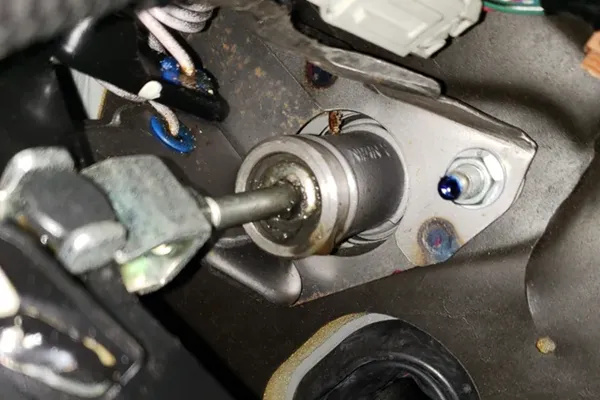
What we find inside returned units
In the units we have opened, the failure forms repeat in a fairly consistent way. The pattern is worth knowing, because each finding maps to a specific symptom your customer reports.
- Swollen or lipped cup seal. The seal edge loses its sharp lip and stops sealing against the bore under pressure. Fluid slips past it during the pedal stroke. This is what produces a pedal that sinks slowly while held down.
- Bore scoring and polishing. Grit, moisture or debris scratches the bore surface. The seal can no longer wipe it cleanly, so the unit becomes temperature-sensitive — worse when hot, better when cold.
- Internal corrosion and sludge. Contaminated or moisture-loaded fluid leaves deposits on the bore wall and around the piston. Symptoms appear as a stiff or slow-returning pedal rather than a sink.
- Restricted or blocked compensating port. Fluid cannot return to the reservoir, so pressure stays trapped in the line. The clutch can drag or slip even though the pedal was released.
- Damaged outlet port, cracked housing or stripped threads. Usually an installation or over-torque issue, and not something a seal kit will fix.
This is also why a seal kit is a conditional repair, not a default one. A new cup seal in a scored or corroded bore will not hold for long. If the bore surface fails a visual and feel check, the housing is the part that has to go.
When Should You Replace a Clutch Master Cylinder — and How Far?
Now you know what the part does and how it fails. The last decision is the commercial one: replace it, replace more than it, and order the right specification. Get this wrong and the part comes back.
You replace a clutch master cylinder when a confirmed diagnosis points to it and the part itself fails inspection. There is no fixed replacement interval or mileage figure that makes this decision for you. Usage, fluid condition, bore quality and installation discipline all move the service life of the unit.
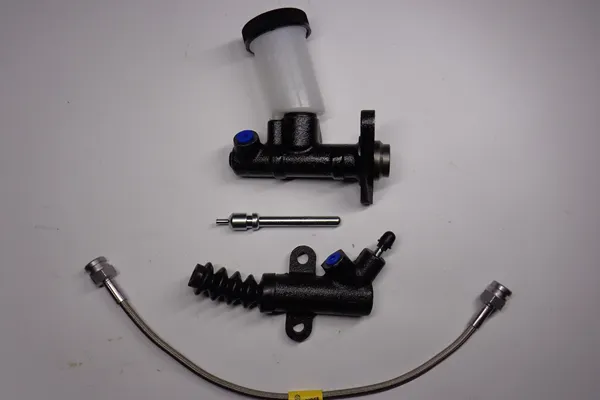
Confirmed triggers for replacement
Treat any of these as a reason to replace the unit, provided the earlier checks have already ruled out air, the slave cylinder and mechanical wear:
- Confirmed internal bypass. The pedal creeps down on a hold test after a correct bleed.
- Visible external leak from the bore, dust boot or outlet port.
- Bore scoring, corrosion or pitting beyond what a seal kit can restore.
- Blocked or damaged compensating port.
- Cracked housing or damaged outlet threads.
- A previous seal kit that did not hold, which usually means the bore was already out of tolerance.
Master cylinder only, or the whole circuit?
- Master cylinder alone makes sense when the fault is isolated, the slave is dry and moves freely, the fluid is clean, and the line is sound.
- Add the slave cylinder when its boot is wet with fluid, the piston is seized or noisy, or it shows the same seal degradation pattern as the master.
- Add the flexible line when pedal behaviour changes with temperature, or the hose is cracked, bulging or collapsing internally. A hose that swells can act like a one-way valve.
- Add the clutch itself only when the mechanical checks confirm disc, pressure plate or release bearing wear.
Always flush and replace the fluid when you fit a new unit. Contaminated fluid is one of the most common reasons a replacement fails early, and it costs almost nothing to avoid.
Which specification should you order?
Order by vehicle application, not by appearance. Bore size, stroke, port position, reservoir type, mounting flange and pushrod length all have to match the application. Confirm the part number against the VIN or an application list, and never substitute a brake master cylinder for a clutch unit. On the supply side, ask for the manufacturer's documentation — an IATF16949 quality system is a good signal, but treat certification as a document you verify rather than a claim you accept.
Frequently Asked Questions
How do I know if my clutch master cylinder is bad?
Bleed the circuit correctly, then hold steady pressure on the pedal for a minute. If the pedal creeps down, internal bypass is likely. Confirm by checking the slave cylinder, the line and the mechanical release parts before ordering anything.
Can I drive with a failing clutch master cylinder?
It depends on how far the failure has progressed. A unit losing pressure can make gear engagement difficult or unreliable, and the condition usually worsens. Have a qualified technician assess it rather than continuing to drive on it.
Does a clutch master cylinder need bleeding after replacement?
Yes. Air trapped in the circuit produces a soft pedal that feels like the original fault. Bleed the system fully after installation, and check the fluid level again after the first drive.
Can a seal kit fix a clutch master cylinder?
Only if the bore is sound. A seal kit can work when the cup seal has degraded but the bore is smooth and corrosion-free. If the bore is scored, pitted or sludged, replacing the housing is the reliable option.
How long does a clutch master cylinder last?
There is no fixed interval. Fluid condition, contamination, bore quality, pedal usage and installation practice all affect service life. That is why replacement should follow a confirmed diagnosis and part inspection, not a mileage number.
Conclusion
A clutch master cylinder is a small hydraulic pump, but the decision around it is a diagnostic one. Symptoms such as a soft pedal or a bitten floor are candidates, not verdicts, so work the checks in order: fluid and leaks, bleeding, pedal hold test, slave cylinder, then mechanical parts. Internal bypass leaves no fluid on the ground, so the hold test matters more than a visual inspection. Replace the unit when the diagnosis and bore condition justify it, order by application, and flush the fluid. As a direct manufacturer of brake and clutch hydraulics, we back our clutch master cylinders with a 1 year or 30,000 km warranty and build to IATF16949 system requirements, covering the majority of European, American, Japanese and Korean models we produce for — so send us your application list and we will confirm the right part numbers with you.