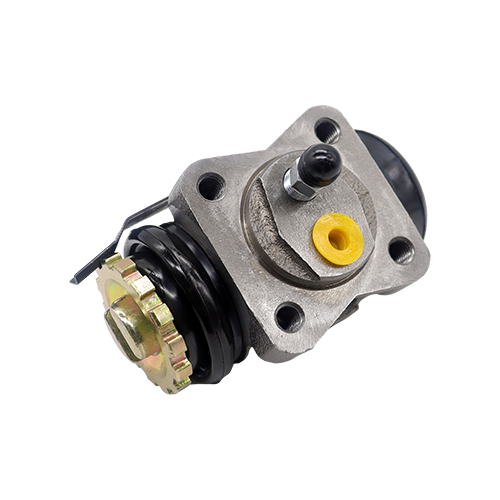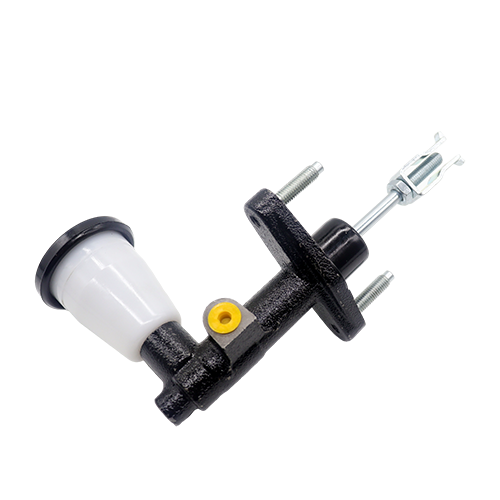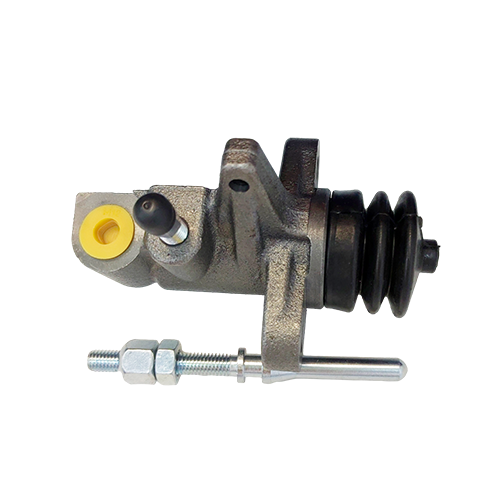
Every importer searches for this list. But the list does not exist — at least not in the way you think it does. Here is what actually matters.
There is no single "top 10" list of brake cylinder manufacturers that works for every buyer. The right manufacturer depends on your specific needs: your target market, your vehicle coverage requirements, your MOQ constraints, and whether you need private label support. This guide gives you a framework to find the right one.
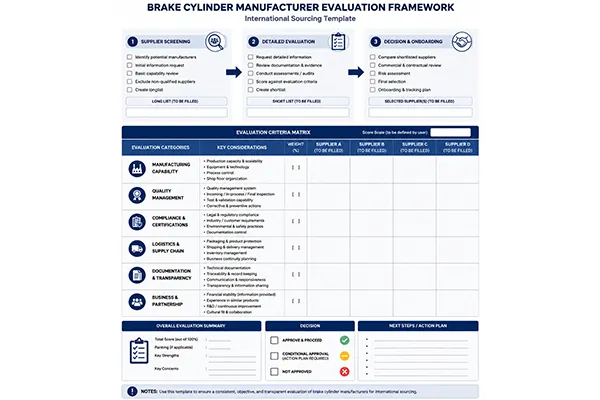
I have been working in brake cylinder manufacturing for over 15 years. I talk to importers, distributors, and brand owners from Southeast Asia, South America, the Middle East, and Africa almost every week. The same question comes up constantly: "Can you send me a list of the top brake cylinder manufacturers?"
I understand why buyers ask this. You want a shortcut. You want someone to do the vetting work for you. But every time I get this question, I know the buyer is about to make a sourcing decision based on the wrong information. So instead of giving you a list, I want to give you something more useful — a way to think about this problem that will protect you from bad suppliers and help you build a reliable supply chain.
Is There Really a "Top 10" List of Brake Cylinder Manufacturers?
You type "top 10 brake cylinder manufacturers" into Google and you get results. But look closely at those results. They mix OE manufacturers1 like Brembo and ATE with aftermarket factories from China. They put Tier 1 suppliers next to small trading companies. They rank companies by marketing visibility, not by how well they serve an importer in Lagos or Jakarta.
OE manufacturers like Brembo or ATE supply car assembly lines directly. They are not the right fit for most aftermarket importers. The relevant category for most international buyers is aftermarket hydraulic brake cylinder manufacturers, and within that category, "best" is always relative to your specific sourcing requirements.
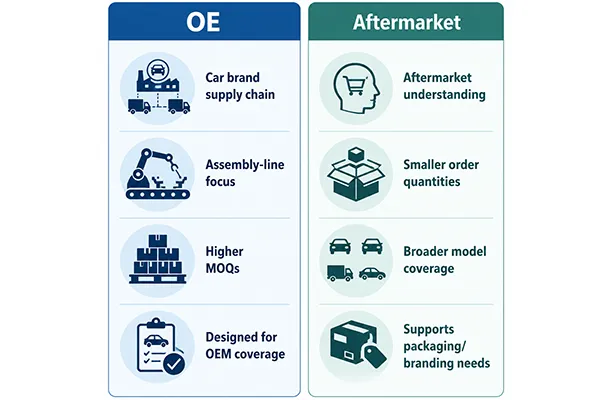
The distinction between OE and aftermarket matters a lot in practice. OE manufacturers work within car brand supply chains. Their MOQs, pricing structures, and product coverage are designed for assembly lines, not replacement parts markets. If you are importing brake cylinders to sell to workshops and distributors in South America or Southeast Asia, you need a manufacturer that understands the aftermarket — one that covers a wide range of vehicle models, supports smaller order quantities, and can work with your packaging and branding requirements.
I have spoken to buyers who spent months chasing OE-adjacent brands before realizing those companies had no interest in serving a regional aftermarket distributor. The right manufacturer for you is almost certainly a dedicated aftermarket factory, not a name you recognize from a luxury brake caliper advertisement.
What to Look For Instead of a Ranking
| Buyer Type | Key Priority | What to Evaluate |
|---|---|---|
| Importer / Wholesaler | Price and delivery reliability | Factory capacity, lead times, payment terms |
| Regional Distributor | Consistent quality, warranty support | QC processes, inspection rates, after-sales policy |
| Private Label Brand Owner | OEM support, custom packaging | Branding capabilities, MOQ flexibility, documentation |
The table above is a starting point. Your situation may combine elements from more than one category. The point is to know your own priorities before you start evaluating suppliers. Without that clarity, any list someone gives you is just noise.
How Do You Verify a Brake Cylinder Manufacturer's Production Capabilities?
Most supplier websites say the same things. "Advanced equipment." "Modern production lines." "Strict quality control." These phrases mean nothing without evidence. The question is not what a manufacturer claims — it is what they can show you.
To verify a brake cylinder manufacturer's production capability, ask specifically about their CNC machining equipment, their bore machining tolerances, and their monthly output capacity with documentation. Vague answers about "modern facilities" are a red flag. A credible factory will give you specific numbers and support a factory audit.
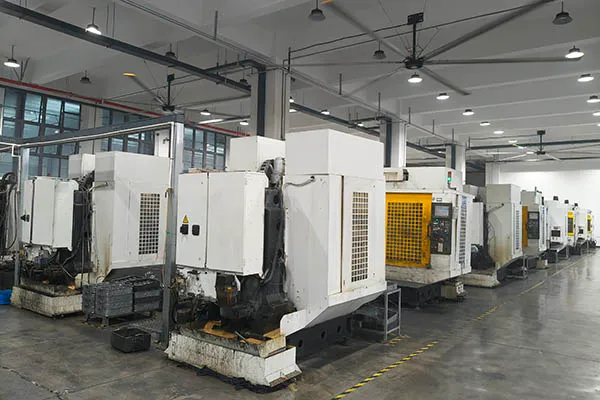
The most important process in brake cylinder manufacturing is CNC bore machining2. This is not a detail — it is the foundation of product performance. The bore is where the piston travels and where the rubber seals make contact. If the bore dimensions are even slightly off, the seals wear faster, hydraulic pressure becomes unstable, and the cylinder starts leaking. This is one of the most common causes of early product failure3 in lower-quality aftermarket cylinders.
When I talk to new customers, I explain that at our factory, 100% of cylinder housings go through dimensional inspection after machining. Not a sample. Every single one. This is the kind of specific, verifiable answer you should expect from any manufacturer you are seriously evaluating.
Questions to Ask a Supplier About Their Production
- What CNC machining equipment do you use, and how many machines do you operate?
- What is your bore machining tolerance for a standard master cylinder?
- What is your actual monthly output, and can you provide production records?
- How many production lines do you run, and what is the shift structure?
- What is your standard lead time from order confirmation to shipment?
These are not trick questions. Any experienced manufacturer will answer them without hesitation. If a supplier becomes evasive, changes the subject to price, or gives you only marketing language in response, that is a signal to move on.
A factory that covers 22,000 square meters, runs 12 production lines, and produces over 200,000 units per month4 operates at a different level of reliability than a small workshop. But capacity alone is not the answer. Capacity needs to be paired with process discipline. Both matter.
What Quality Control Standards Should a Reliable Manufacturer Meet?
ISO 9001 certification5 gets mentioned in almost every supplier profile. By now, it is table stakes. It tells you a factory has documented its processes. It does not tell you whether those processes actually produce consistent, reliable parts.
A reliable brake cylinder manufacturer should go beyond ISO 9001 by implementing 100% finished product inspection, hydraulic pressure testing, leakage testing, and high and low temperature testing6. Ask for specific inspection rates and test procedures, not just certification documents.
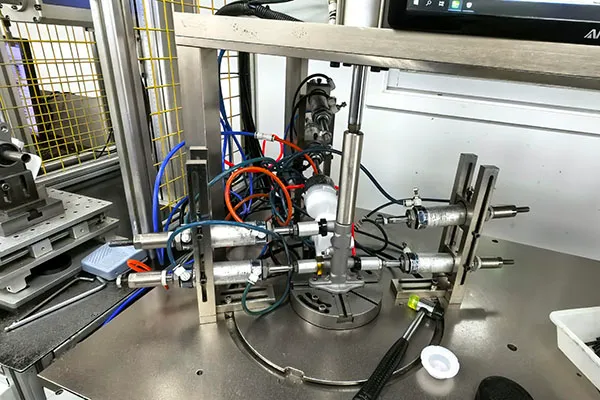
Here is the practical reality of quality control in brake cylinder manufacturing. There are four stages where problems can be caught or missed: incoming materials, in-process machining, assembly, and final inspection. A supplier that only does final inspection is already behind. By the time a defective seal or a poorly machined bore reaches final inspection, resources have already been wasted.
The better approach is layered quality control. Start with material verification — confirm that the cast iron, aluminum alloy, rubber, and steel components meet the required specifications before they enter production. Then inspect machining dimensions during production. Then inspect assembly. Then test every finished unit.
Quality Control Stages and What to Verify
| QC Stage | What a Strong Supplier Does | What a Weak Supplier Does |
|---|---|---|
| Incoming Materials | Material composition testing, supplier qualification | Accepts materials based on supplier claims only |
| In-Process | 100% housing inspection, dimension checks | Random sampling only |
| Assembly | Surface finish inspection, seal installation checks | Visual inspection only |
| Final Testing | Hydraulic pressure, leakage, temperature testing on all units | Spot checks on final batches |
| Documentation | Full traceability records per batch | No records or incomplete records |
The materials a manufacturer uses directly affect how long the product lasts. HT200 gray cast iron7 provides the density and machinability needed for cylinder bodies. EPDM rubber seals8 hold up to brake fluid chemistry over time. 65Mn spring steel maintains its tension through repeated compression cycles. These material choices are not marketing details — they are engineering decisions that determine whether a cylinder survives one million operating cycles9 or fails at 200,000.
When a new customer asks me about our product lifespan, I do not just say "more than one million cycles." I explain that this number comes from the material selection, the machining accuracy, and the testing process working together. That is the kind of explanation a credible manufacturer can give you. If a supplier cannot explain the "why" behind their specifications, they probably do not understand their own product well enough to back it up.
Why Does a Supplier's Regional Market Experience Matter?
A manufacturer can have excellent equipment and rigorous quality control and still be the wrong partner for your business. The missing piece is market fit. A supplier who has never exported to your region does not understand your customers' vehicle models, your local logistics constraints, or the specific aftermarket demands in your market.
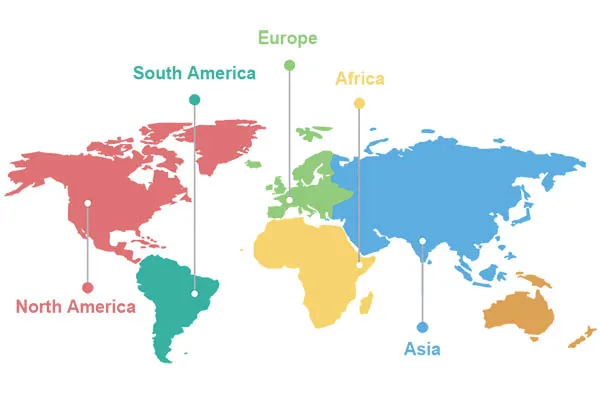
A brake cylinder manufacturer with direct export experience in your target region — Southeast Asia, South America, the Middle East, or Africa — reduces your sourcing risk significantly. They will already understand the vehicle coverage requirements, documentation needs, and typical buyer expectations in your market.
I have seen this play out many times with buyers entering new markets. A distributor in Colombia sourced cylinders from a factory that mostly served European vehicle applications. The product quality was fine. The problem was that the coverage was wrong — the SKUs did not match the dominant vehicle models in their market. They ended up with inventory they could not move.
Regional experience means a supplier knows which vehicle brands dominate your market. In Southeast Asia, Japanese and Korean vehicles make up the majority of the car parc10. In South America, the mix includes more European and American vehicles11 alongside Japanese models. In the Middle East and Africa, the spread is wide, but specific models are dominant in each country. A supplier who has been serving your region for years already has this knowledge built into their product catalog.
Regional Vehicle Coverage by Market
| Market Region | Dominant Vehicle Origins | Key Coverage Priority |
|---|---|---|
| Southeast Asia | Japanese, Korean | Toyota, Honda, Mitsubishi, Hyundai, Kia applications |
| South America | Japanese, European, American | Broad coverage across multiple origins |
| Middle East | Japanese, Korean, American | High-volume fleet and passenger vehicle models |
| Africa | Japanese, European | Older model year coverage, durable construction |
Beyond vehicle coverage, regional experience also affects documentation. Some markets require specific certifications or testing reports for import clearance. A supplier with no export history in your market will not know this. You will find out at the port, not at the factory.
Ask a potential supplier directly: "How many customers do you currently serve in my region? What are the most common vehicle applications they order?" A supplier with real experience will answer this without hesitation. A supplier without it will give you a vague answer about their "global reach."
What Sourcing Red Flags Should You Watch Out For?
Most buyers focus on finding the right supplier. Fewer spend enough time thinking about how to recognize the wrong one. After more than 15 years of working with international buyers, I have seen the same warning signs appear again and again before a sourcing relationship goes wrong.
Common red flags when evaluating brake cylinder manufacturers include: vague or evasive answers about QC processes, refusal to support trial orders, inability to provide export documentation, and no verifiable experience in your target market. These signals often indicate a trading company, not a factory, or a factory without the systems to serve international buyers reliably.
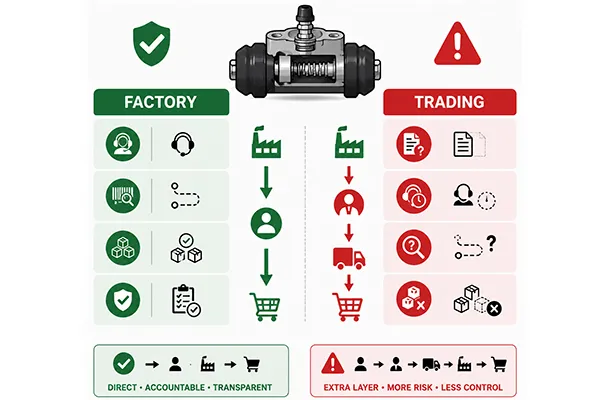
The trading company vs. factory distinction12 is a major one. Trading companies can be useful in some sourcing scenarios, but when you need consistent quality, technical support, and direct factory accountability, you need to be talking to the manufacturer directly. A trading company adds a layer between you and the production process. When a quality problem happens — and eventually, one will — you need to be able to go directly to the source.
One of the clearest red flags is a supplier who resists trial orders. A factory that is confident in its product will support a small initial order. They know that if the product performs well, a larger ongoing relationship will follow. A supplier who pushes back hard on trial quantities — or who sets unreasonably high MOQs for a first order — is either protecting margins at your expense or concerned about what you will find when you inspect the product properly.
Sourcing Red Flags vs. Positive Signals
| Red Flag | Positive Signal |
|---|---|
| Vague answers about QC ("We have strict quality control") | Specific inspection rates, named test procedures |
| No support for trial orders or sample requests | Flexible MOQ, supports market testing |
| Cannot provide ISO certificates or test reports | Documentation available immediately upon request |
| No verifiable export history in your market | Named customers or markets with repeat order history |
| Long response times, unclear technical answers | Fast response, specific and accurate product knowledge |
| Packaging is generic with no customization option | OEM and private label support with documented minimums |
Private label and OEM support is another area where you learn a lot about a supplier's seriousness. A manufacturer who supports custom packaging, logo printing, and brand development is set up to serve long-term partners. This level of service requires investment — in design capability, in flexible production runs, in documentation and compliance. A factory that offers this credibly is a factory that is built for international B2B relationships.
Conclusion
Stop looking for a ranked list. Start building a verification framework. The right brake cylinder manufacturer is the one who can prove their production quality, demonstrate regional experience, support your MOQ needs, and communicate with you like a long-term partner.
"List of the largest automotive suppliers - Wikipedia", https://en.wikipedia.org/wiki/List_of_the_largest_automotive_suppliers. Provides a definition for Original Equipment (OE) manufacturer, clarifying that these companies produce parts for a new vehicle's original assembly, as distinct from aftermarket parts intended for replacement or service. Evidence role: definition; source type: encyclopedia. Supports: The definition of Original Equipment (OE) manufacturer in the automotive context, confirming they supply parts for new vehicles.. ↩
"[PDF] Design, specification and tolerancing of micrometer-tolerance ...", https://nvlpubs.nist.gov/nistpubs/Legacy/IR/nistir5615.pdf. A technical paper or engineering resource could explain the relationship between a hydraulic cylinder's bore surface finish, dimensional tolerances, and its functional performance, including seal life and pressure-holding capability. Evidence role: mechanism; source type: paper. Supports: The technical importance of bore machining accuracy and surface finish for the performance and longevity of hydraulic cylinders.. Scope note: The source would likely discuss hydraulic cylinders in general, but the principles are directly applicable to brake cylinders. ↩
"(PDF) An Investigation on Failure of Automotive Components in Cars", https://www.academia.edu/33830784/An_Investigation_on_Failure_of_Automotive_Components_in_Cars. A failure analysis report or technical study could corroborate that dimensional inaccuracies and poor surface finish in the cylinder bore are common root causes for premature seal wear and fluid leakage in hydraulic components. Evidence role: case_reference; source type: research. Supports: That improper bore dimensions and finish are a frequent cause of premature failure in hydraulic cylinders.. Scope note: A general study on hydraulic cylinder failure may not specifically name brake cylinders but would support the underlying technical principle. ↩
"Brake Cylinder Manufacturer in China - GDST Auto Parts", https://goldenstarintl.com/brake-cylinder-manufacturer/. Provides market research or industry analysis on the production capacities of automotive component manufacturers, offering a scale for what constitutes a small, medium, or large-scale factory in the sector. Evidence role: statistic; source type: research. Supports: Data on typical production volumes for automotive parts manufacturers, which would help classify a factory producing 200,000 units/month as large-scale.. Scope note: Specific data for brake cylinder factories may be part of broader reports on the automotive hydraulic systems market. ↩
"ISO 9001:2015 - Quality management systems — Requirements", https://www.iso.org/standard/62085.html. The International Organization for Standardization (ISO) or a related quality management body can define the ISO 9001 standard, explaining that it certifies a company has a documented quality management system, but does not directly certify product quality. Evidence role: definition; source type: institution. Supports: The definition and scope of the ISO 9001 standard, clarifying that it pertains to the documentation of quality management systems, not the quality of the final product itself.. ↩
"Federal Motor Vehicle Safety Standards; Brake Hoses", https://www.federalregister.gov/documents/2004/12/20/04-27088/federal-motor-vehicle-safety-standards-brake-hoses. Automotive engineering standards, such as those from SAE International or ISO, specify performance and testing requirements for hydraulic brake system components, often including tests for function under high and low temperatures. Evidence role: general_support; source type: institution. Supports: That performance testing under various conditions, including temperature extremes, is a standard requirement for hydraulic brake components.. Scope note: The specific standard may cover the entire brake system or other components, but the principle of temperature testing would be demonstrated as an industry best practice. ↩
"[PDF] Properties of gray cast iron as affected by casting conditions", https://nvlpubs.nist.gov/nistpubs/jres/13/jresv13n4p573_A2b.pdf. A materials engineering database or technical standard (e.g., GB/T 9439) can provide the mechanical and physical properties of HT200 gray cast iron, confirming its suitability for applications requiring good castability, machinability, and vibration damping, such as hydraulic components. Evidence role: definition; source type: paper. Supports: The material properties of HT200 gray cast iron, such as its tensile strength, hardness, and machinability.. ↩
"FKM & EPDM Chemical Compatibility Charts - Utex Industries Inc", https://utexind.com/materials-resources/chemical-compatibility/. Provides technical data or a chemical compatibility chart showing that EPDM rubber has excellent resistance to glycol-based brake fluids (DOT 3, 4, 5.1), making it a standard material choice for seals in modern braking systems. Evidence role: mechanism; source type: research. Supports: The chemical compatibility of EPDM (Ethylene Propylene Diene Monomer) rubber with glycol-based brake fluids.. Scope note: The source should also note that EPDM is not compatible with petroleum-based fluids, which reinforces the importance of correct material selection. ↩
"49 CFR 571.135 -- Standard No. 135; Light vehicle brake ...", https://www.ecfr.gov/current/title-49/subtitle-B/chapter-V/part-571/subpart-B/section-571.135. An automotive engineering standard (e.g., from SAE) or a manufacturer's test protocol could specify the number of cycles a brake cylinder is expected to endure under test conditions to be considered durable and reliable, often in the range of hundreds of thousands to over a million cycles. Evidence role: statistic; source type: institution. Supports: The existence of industry standards or typical test parameters for the lifecycle endurance of brake cylinders.. Scope note: The exact number of cycles can vary by standard and vehicle application (e.g., passenger vs. commercial vehicle). ↩
"[PDF] Driving change - JATO Dynamics", https://www.jato.com/hubfs/SE%20Asia%20barriers%20report/JATO_SE_ASIA_Barriers_Report.pdf. Market research reports or publications from automotive industry associations provide statistics on vehicle sales and the existing car parc in Southeast Asia, confirming the dominant market share of Japanese and Korean vehicle manufacturers in the region. Evidence role: statistic; source type: research. Supports: Statistical data on the composition of the vehicle fleet (car parc) in Southeast Asian countries.. ↩
"Automotive industry in Argentina - Wikipedia", https://en.wikipedia.org/wiki/Automotive_industry_in_Argentina. Provides automotive market analysis for South America, showing a diverse car parc with significant market shares for European (e.g., Volkswagen, Fiat, Renault), American (e.g., Chevrolet, Ford), and Japanese (e.g., Toyota, Honda) brands. Evidence role: statistic; source type: research. Supports: Data on the vehicle market composition in major South American countries.. Scope note: Market share can vary significantly by country within the region. ↩
"[PDF] Using Export Companies to Expand Cooperatives' Foreign Sales", https://www.rd.usda.gov/sites/default/files/rr52.pdf. An international business or supply chain management guide explains the distinct roles, advantages, and disadvantages of sourcing directly from a factory versus using a trading company, covering aspects like price, communication, quality control, and technical accountability. Evidence role: general_support; source type: education. Supports: The fundamental differences between sourcing from a manufacturer versus a trading company.. ↩