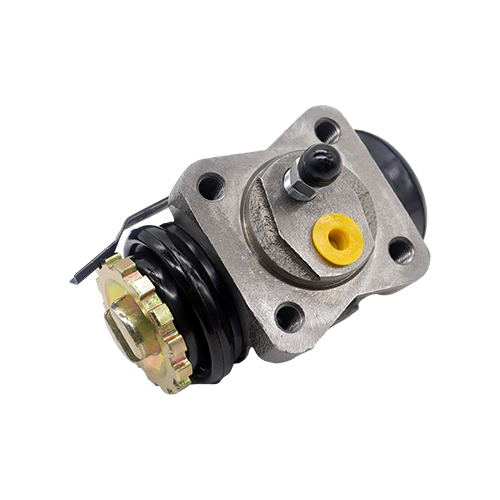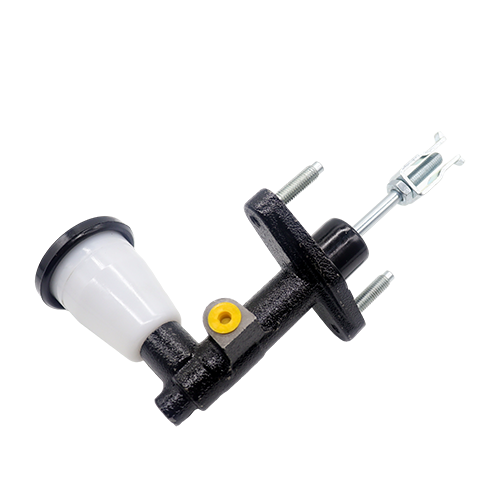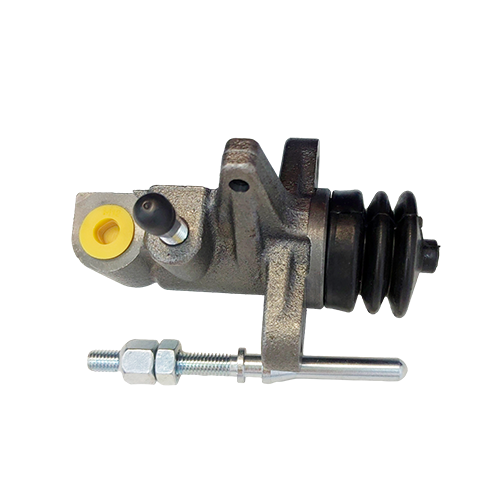
Brake master cylinder components are easy to list and hard to buy correctly. You check a quotation against your own shelf, one bore size or port thread looks close enough, and you approve the order. Months later, a fitment problem or a warranty claim tells a different story. The fix starts with understanding what each component actually locks in.
A brake master cylinder is built from a reservoir, a cap with a diaphragm, a primary and a secondary piston, rubber cups and seals, return springs, a machined bore, check or residual valves, and port or line fittings. Together, these brake master cylinder components turn pedal force into hydraulic pressure and control how that pressure is released.
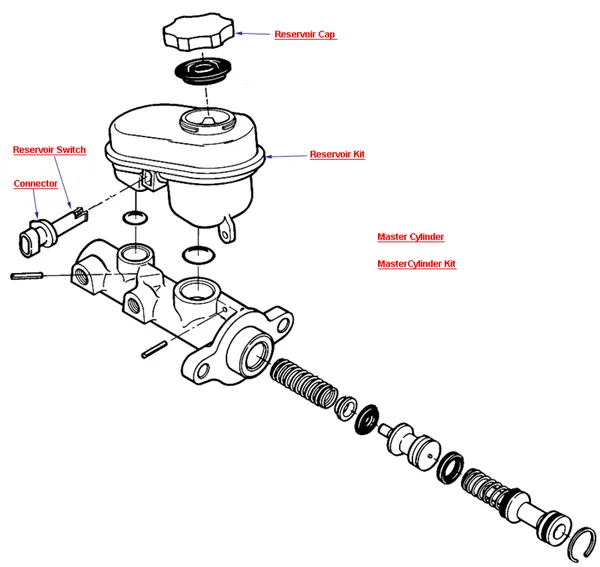
Knowing the names is the easy half. The harder half is deciding which of these brake master cylinder components actually protects your stock, your vehicle list, and your warranty position. Let me walk you through that as a buyer's checklist rather than a glossary.
What Does Each Brake Master Cylinder Component Do?
A supplier sends you a drawing and a price. You scan for familiar words — reservoir, piston, seal — and everything looks normal. Normal is not the same as correct, though, because each brake master cylinder component carries its own decision about fitment and risk.
Every component performs one function and locks in one decision. The reservoir holds fluid and sets mounting space. The cap and diaphragm manage pressure equalisation and moisture. The pistons and cups make and separate pressure. The bore sets displacement. Valves and ports control return flow and line connection. Read them as decisions, not decorations.
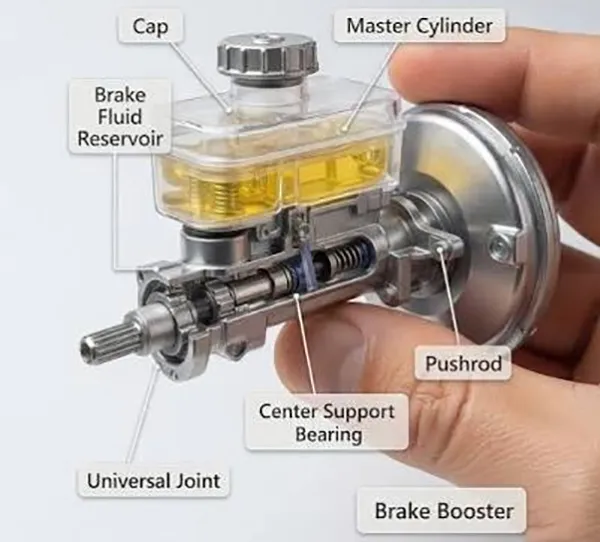
When I answer importer questions, one pattern repeats. Buyers rarely struggle to name the parts. They struggle to know which part name matters for the decision in front of them. A master cylinder has three working groups, and each answers a different question.
The fluid and mounting group. The reservoir, its mounting feet, and the cap assembly decide whether the unit physically fits your application and how it behaves as the fluid level changes. A reservoir that is taller, deeper, or angled differently from the original can foul an air box, a strut tower, or a hose route.
The pressure group. The primary and secondary pistons, their cups and seals, and the bore generate and hold pressure. In a tandem design the two circuits stay separate on purpose, so one failure does not remove all braking force.
The control group. Return springs, compensating ports, check or residual valves, and outlet fittings decide how pressure releases and how the unit connects to your hard lines.
Understanding each component is only the first step. To see how these parts work together to create hydraulic pressure and control braking force, read our guide on how a brake master cylinder works.
| Component | Job it performs | Decision it locks in |
|---|---|---|
| Reservoir | Stores fluid and feeds the bore | Mounting space and capacity |
| Cap and diaphragm | Seals and equalises pressure | Pedal stability as the level drops |
| Primary and secondary piston | Builds pressure in a tandem circuit | Circuit split and pedal travel |
| Cups and seals | Contain fluid under pressure | Leak behaviour and warranty exposure |
| Return springs | Push pistons back after release | Pedal return and residual drag |
| Bore | Sets displacement per stroke | Pedal ratio and brake balance |
| Check valve and ports | Hold line pressure, connect lines | Bleed behaviour and fitting match |
A component only matters to you if it changes a decision. If two quotations differ on cap shape and your vehicle list never interferes with it, that difference is cosmetic. If they differ on port seat angle, that difference can become a comeback.
Why Do Pistons, Cups, Seals, and the Bore Fail as One System?
A buyer sends a photo of a leaking unit and asks which single part failed. It is a fair question, and it is almost never the right one. A brake system rarely leaks because one component decided to misbehave on its own.
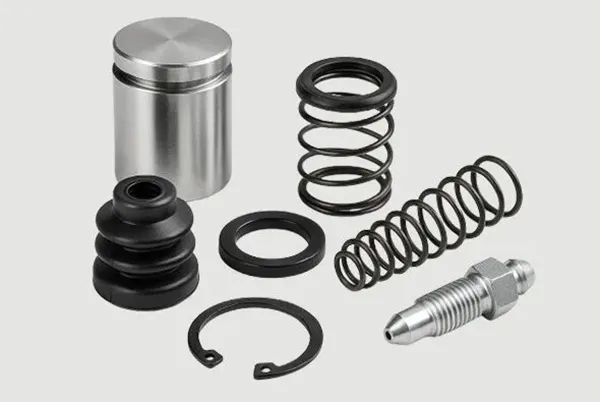
A leak or a spongy pedal is a system outcome, not a single-part verdict. The cup seals against the bore, so bore finish and roundness decide whether that seal can hold. The piston keeps the cup square to the bore. The spring returns it. Change one variable and you change the load on the others.
When customers ask me to name the guilty part, I ask three questions first.
- Where is the fluid appearing? Fluid near the pushrod end points toward the primary seal area and bore condition. Fluid at the reservoir seam or cap points toward the cap, diaphragm, or reservoir body. Fluid at an outlet points toward a fitting or seat.
- When does the symptom appear? A pedal that sinks slowly under steady pressure behaves differently from one that is firm and then fades, and from one that never returns fully.
- What changed before it appeared? A recent bleed, a fluid change, a brake job, or a long storage period all change what you should inspect first.
None of those answers names a component on its own. They narrow a group. That is deliberate, because the seal, the piston, and the bore work as one assembly.
Why blaming one part usually creates a repeat claim
If you replace a cup without checking the bore, the new cup meets the same surface the old one did. If you refinish a bore without checking the piston for scoring or the spring for fatigue, you have solved half a problem. In our experience with customer inquiries, repeat claims tend to come from units where one visible part was changed and the surrounding relationship was never checked.
This is also why I decline to quote failure rates. The same symptom can trace back to fluid contamination, installation technique, or a genuine component defect, and a photograph cannot separate those causes.
A brake master cylinder does not fail one part at a time. It fails as an assembly, so it has to be inspected as an assembly.
For your purchasing decision, that changes the question you ask a supplier. Instead of "is this part good?", ask how they control the bore-to-cup relationship and what inspection documentation travels with the batch. That is a question a real manufacturer can answer.
Is Bore Diameter a Fit Lock Rather Than a Quality Score?
A quotation arrives with a bore size printed on it, and the instinct is to compare that number with your original part. When the numbers match, the unit feels approved. I understand the instinct, and I still treat a matching bore as the first gate only, not the verdict.
Bore diameter is a fit parameter, not a quality score. It tells you how much fluid one stroke displaces, which shapes pedal travel and brake balance. It says nothing about the surface finish inside that bore, the cup compound, or whether the ports sit where your brake lines expect them.
Buyers who rank suppliers on a single number are optimising the wrong variable. Here is the mental shift I suggest: turn each specification into the decision it locks in.
| What you confirm | What it tells you | What it does not tell you |
|---|---|---|
| Same bore diameter | Displacement per stroke is comparable | Bore finish, cup compound, port positions |
| Same port thread | A fitting may thread in | Seat angle, thread depth, leak-free sealing |
| Same reservoir shape | Mounting may line up | Internal baffling, capacity, cap venting |
Why "same bore, same look" is not interchangeability
Two units can share a bore size and still differ in ways that matter once the part is on a vehicle. The outlet positions may sit at a different angle. The reservoir may sit lower and interfere with a hose. The internal valving may suit a disc and drum split that your market does not use.
This is where mismatches usually originate. A buyer compares the visible number, approves the order, and discovers the difference at installation. Fitment is the hard boundary, and the honest way to confirm it is by vehicle make, model, year, engine, and market specification, cross-checked against the original equipment reference number — not by a general claim that a unit is "universal".
So when a supplier tells you a unit fits because the bore matches, ask for the vehicle list and the OE reference it was built against. If they cannot name either, you are being asked to carry their uncertainty in your warranty.
Why Do Cheap Brake Master Cylinder Components Raise Warranty Risk?
A lower unit price is the easiest number to compare and the easiest one to regret. Cheap brake master cylinder components do not fail at the counter. They fail at the installer, in front of your customer, on your brand name.
The real cost of a substitute part is selection accuracy plus claims risk. A cheaper unit that matches fewer vehicles, returns more often, or needs rework moves cost from your invoice to your operations. Unit price is only the visible part of the total.
I am not going to invent a failure percentage for you, and I would be sceptical of anyone who does without knowing your vehicle list. The maths here is a logic problem rather than a statistics problem. Consider where cost actually moves.
- Fitment mismatch. A unit that fits fewer vehicles than advertised creates returns, two-way freight, and restocking time.
- Re-work at the installer. When a part does not seat or bleed as expected, someone pays for the second installation. Often, that someone is you.
- Warranty claims. If your name is on the box, the claim lands on your desk, not on the factory's.
- Dead stock. A part that covers twelve vehicles out of sixty in your range occupies shelf space and ties up working capital.
- Category trust. A buyer who has a bad experience with one brake line item starts questioning your whole catalogue.
What a durable part actually buys you
A durable brake master cylinder is not a marketing phrase. It is a combination of material choice, machining consistency, and seal matching that shows up as fewer surprises after installation. You cannot judge those qualities from a quotation. You see them in how a supplier answers technical questions, how they document tolerances, and whether they can name the vehicle applications their unit was built for.
That is why I ask buyers to compare quotations on total cost rather than on the headline figure. Add the expected returns, the labour exposure, and the value of your own time, and a slightly higher unit price is often the cheaper decision.
How Should You Verify Brake Master Cylinder Components Before Ordering?
By now you probably agree that unit price is the easiest number to compare and the least useful on its own. The harder question is what to check before you commit a container. I use a short verification file for every quoted unit, and it takes less time than one rejected shipment.
Build a verification file for each quotation. It should cover the vehicle list with make, model, year, engine and brake variant, the OE reference number, the market specification, port and fitting confirmation, warranty terms in writing, and the supplier's quality documentation. Confirm every item, not just the convenient ones.
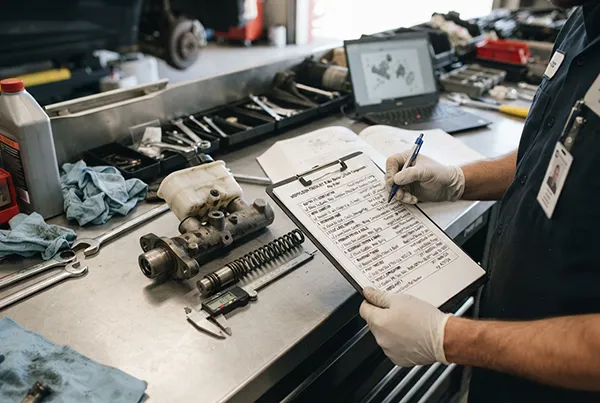
A buyer's checklist for brake master cylinder components
- Vehicle list. Ask for make, model, year range, engine, and brake system variant. A general model name is not enough, because one model year can carry more than one specification.
- OE reference number. This is the anchor. Cross-check every unit against a reference number rather than a description or a photo.
- Market specification. Confirm the standard your market requires and check that the unit was built for it, not adapted to it.
- Ports and fittings. Verify thread size, thread pitch, and seat type. A fitting that threads in is not the same as a fitting that seals.
- Warranty terms. Get coverage in writing — period, mileage, and what happens with freight and labour.
- Quality documentation. Ask for the documents that accompany the batch, and treat certificates as documents to verify with the issuing body rather than as proof of performance.
- Sample before volume. Fit one unit on a known vehicle before you place the container order.
For any application-specific decision, have a qualified brake technician confirm fitment and function before the part goes on a road vehicle. That step protects you, and it protects the customer who trusts your catalogue.
Frequently Asked Questions
What are the main components of a brake master cylinder?
A typical unit contains a fluid reservoir, a cap with a diaphragm, a primary and a secondary piston, rubber cups and seals, return springs, a machined bore, check or residual valves, and outlet ports with line fittings. These parts work together as one hydraulic assembly rather than as separate, independent items.
Can I replace only the seals in a brake master cylinder?
Sometimes, but only after inspecting the whole assembly. A new seal running against a worn or scored bore will not hold for long. In our experience with customer inquiries, seal-only repairs that skip bore and piston inspection are the ones most likely to return as claims.
Does the same bore diameter mean a master cylinder will fit my vehicle?
No. Bore diameter is one fit parameter. Interchangeability also depends on port positions, fitting seat type, reservoir shape and capacity, internal valving, and market specification. Confirm fitment by vehicle model, year, engine and market spec against an OE reference number.
What does an IATF16949 certificate tell me about a supplier?
It tells you their quality management system has been audited against a recognised automotive standard. It does not certify a specific part or guarantee a specific batch. Verify the certificate with the issuing body, check that its scope covers the product you are buying, and confirm it is current.
Conclusion
Components of a brake master cylinder become useful knowledge only when you turn each part into a decision. The reservoir and cap settle mounting and fluid behaviour. The pistons, cups, seals and bore hold pressure as one system. The valves and ports control return flow and connection. Compare quotations on total cost, verify every unit against a vehicle list and an OE reference, and treat certificates as documents worth checking. If you want a second opinion on your component list, send your vehicle lineup to our team at GDST. As a direct manufacturer working to IATF16949 specifications, we would rather help you check fitment first than process a claim later.