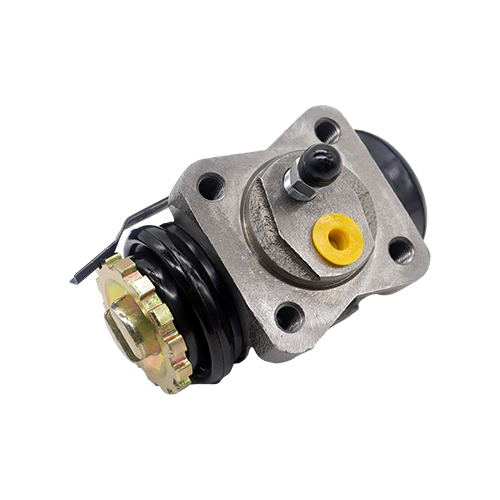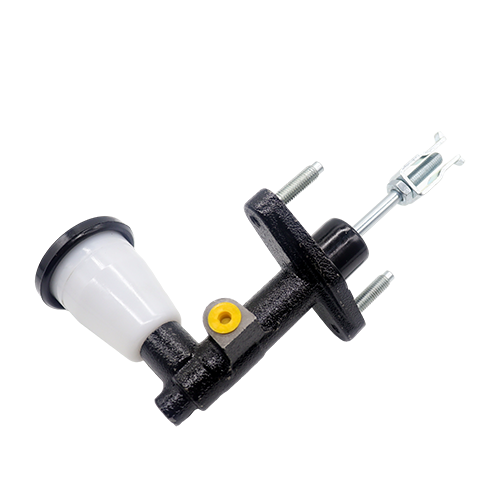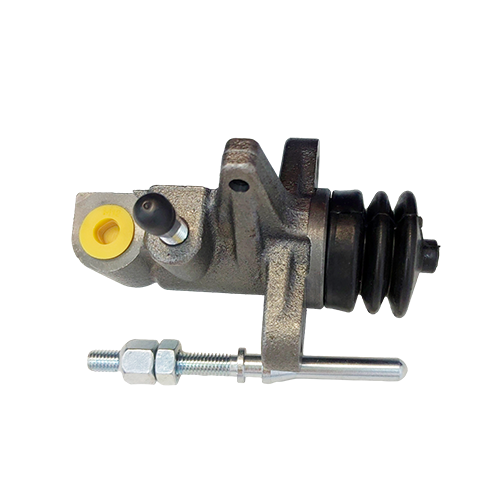
A brake master cylinder that fails in a customer's car rarely costs you just one part. It costs freight, paperwork, and a comeback you cannot bill for. When the same unit comes back a second time, the pressure lands on your desk. So let's look at the failure modes properly.
A brake master cylinder usually goes bad for one of five reasons: contaminated or moisture-saturated fluid corroding the bore, air left in the system after bleeding, external leakage at the reservoir or line fittings, installation error, or a genuine manufacturing defect. Each one leaves different physical evidence, so the real question is not why they fail — it is which failure mode you are looking at before you replace the part.
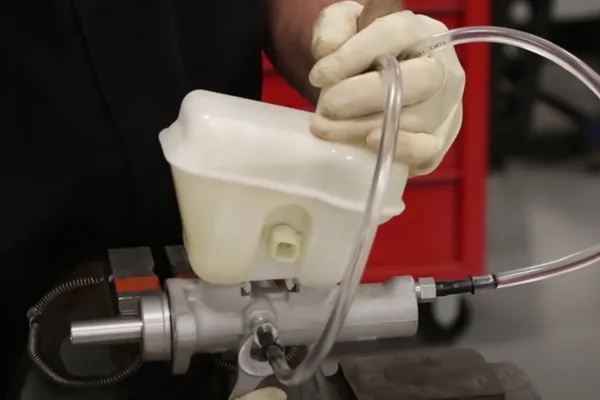
Most of what follows comes from two places: opening returned and warranty units in our workshop, and answering questions from distributors and repair shops. That is not lab data, and I will not pretend it is. It is pattern recognition, and for a buyer it is useful.
Is a Soft or Sinking Pedal Always a Bad Brake Master Cylinder?
Almost every week a distributor tells me the pedal sinks, so the master cylinder must be faulty. That assumption is the most expensive one in this category, because it sends a good part back and leaves the real fault in the car.
No. Air trapped in the ABS hydraulic unit, incomplete bleeding, and aging flexible hoses all produce a soft or sinking pedal, and all of them survive a master cylinder replacement. A true internal leak is only one candidate, and usually the least common one.
What a true internal leak feels like
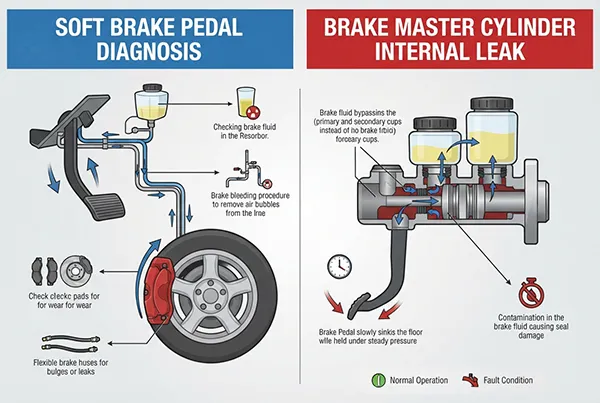
When the cups inside the bore stop sealing, fluid slips past the piston instead of pushing the calipers. In practice this shows up as a pedal that sinks slowly and steadily while you hold it at a stop, with the engine running, and no visible fluid loss anywhere. Pump it, and it may firm up briefly, then sink again. Nothing is wet. That last detail matters — a genuine internal bypass usually leaks inward, not outward.
What trapped air feels like instead
Air behaves differently. A pedal with air in the system feels spongy and long, not steadily falling. It often improves sharply after two or three pumps and then fades again once you drive. If the pedal was fine before a brake job and soft immediately after, I would look at the bleeding process before I look at the part.
Air hiding in the ABS hydraulic unit is the one that catches people out. A standard pedal bleed does not always move it. The complaint often comes back as "the new master cylinder is bad too," when the unit was never purged.
What aging hoses feel like
Flexible hoses that have softened with age expand under pressure. The pedal feels soft when hot and firmer when cold, and the difference grows over months. No fluid loss, no internal leak, no bad part.
| What the driver feels | Most likely cause | Quick check |
|---|---|---|
| Pedal sinks slowly while held, no fluid loss | Internal bypass in the master cylinder | Bench test the unit |
| Spongy pedal, firms up after pumping | Air in the lines | Re-bleed, check bleed order |
| Pedal low right after a brake job | Air in the ABS unit | Activate ABS bleed routine |
| Pedal soft when hot, firm when cold | Expanding flexible hoses | Inspect hoses under pressure |
| Pedal drops once after new pads | Normal caliper piston retraction | Drive and re-check |
Does a Leaking Brake Master Cylinder Mean the Seals Were Cheap?
When a unit comes back wet, the first reaction is often that the cups were poor quality. I understand it. But if we condemn the seal first, we usually miss what actually started the problem.
Usually no. Fluid that has absorbed moisture, contaminated or mixed-spec fluid, and long-term bore corrosion attack the cups from the inside out. In the returned units we open, the seal is often the last thing to fail, not the first.
The cause-and-effect problem
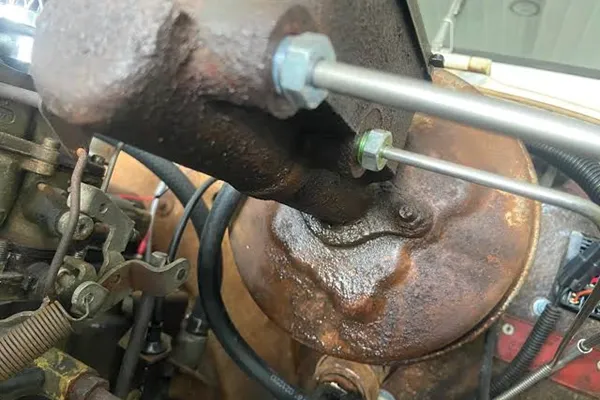
Brake fluid is hygroscopic. It pulls moisture out of the air over time, even in a sealed system, and that moisture has to go somewhere. It lowers the fluid's boiling point and it starts corrosion inside the bore.
Once rust pits the bore wall, the surface is no longer smooth. Every stroke drags the cup across those pits, and the cup wears from the inside out. By the time fluid reaches the outside of the unit, the corrosion has usually been running for a long time.
What we repeatedly see in returned units
- Dark, sludgy fluid with visible sediment in the reservoir — consistent with fluid that was never changed.
- Pitting or dark staining on the bore wall, often heaviest near the resting position of the cup.
- Swollen or softened cups with a bore that still looks clean — this points toward fluid incompatibility rather than wear.
- Cups torn or chewed at the lip, with grit marks in the bore — this suggests contamination carried into the system.
The swollen-cup pattern is the one buyers ask about most, and it is the classic "why did it leak after three months?" case. Mineral oil, power steering fluid, or a mixed-spec fluid can swell EPDM cups in a short time. The part did not fail on its own. Something was poured into the reservoir.
| What the evidence shows | What it points to | Owner of the fix |
|---|---|---|
| Dark fluid, bore pitting | Fluid never serviced | Maintenance schedule |
| Swollen cups, clean bore | Wrong or mixed fluid | Service practice |
| Grit marks, torn cup lip | Contamination during service | Installation |
| Even wear, no corrosion | Possible material or finish issue | Manufacturing review |
Where Should You Look First When a Brake Master Cylinder Fails?
Faced with a warranty claim, most buyers start with the part. I would start with the evidence, because the location of the evidence tells you who should carry the cost.
Work through it in this order: external leakage points, then fluid condition, then bore condition, then cup condition. Each stage narrows the field, and by the time you reach the bore you usually know whether this is a maintenance problem, an installation problem, or something that should have been caught before shipment.
Step one: find where the fluid is
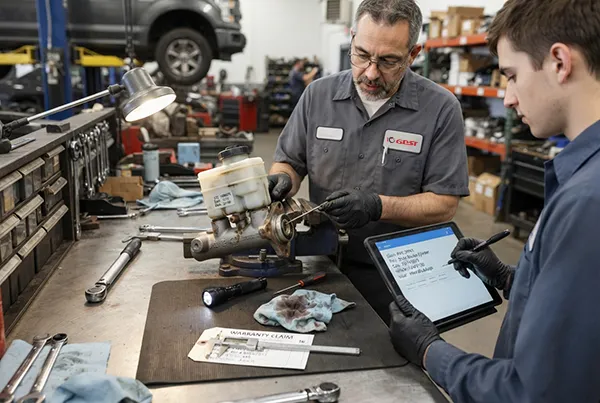
External leakage is the easiest mode to identify and the easiest to get wrong.
- Reservoir grommets and cap — weeping here usually points to heat, age, or an overfilled reservoir rather than a failed bore.
- Line fittings and ports — fluid at a port often means a damaged flare, a cross-threaded fitting, or over-torque during installation.
- Rear seal into the booster — fluid loss with no external trace can indicate a rear seal failure. If the booster is wet inside, that is a strong signal.
Step two: read the fluid
The fluid is a record of how the vehicle was maintained. If it is dark, gritty, or smells burnt, the unit has been living in bad conditions for a long time. That is a maintenance story, not a parts-quality story, and it is worth saying so plainly to your repair shop customers.
Step three: read the bore and the cups together
This is where the triage gets useful. A corroded bore with worn cups is a fluid-condition diagnosis. A clean bore with deformed cups points to fluid incompatibility. A clean bore with a cup that simply will not hold pressure under bench test is the case where I stop defending the part and start asking questions on our own side.
Can Manufacturing Defects Cause a Brake Master Cylinder to Fail?
Yes, and I would rather name them than talk around them. An article that blames the customer for everything is not credible, and buyers see through it quickly.
They can. Bore finish irregularities, cup material that does not hold up to the fluid in use, and contaminants introduced during assembly are all real failure modes. A quality system reduces the risk of these reaching the customer. It does not eliminate them.
The manufacturing-side modes worth naming
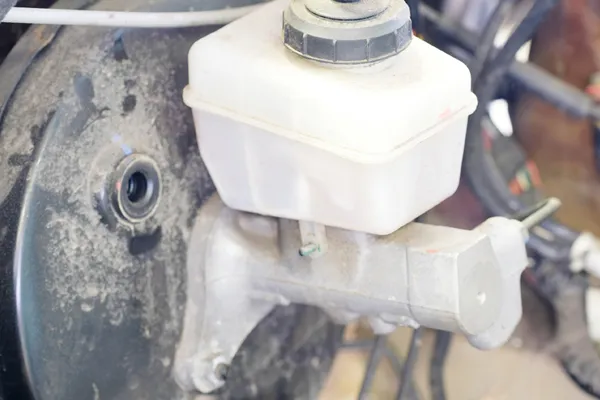
- Bore finish outside specification. A bore that is too rough wears the cups quickly. A finish that is inconsistent from unit to unit produces inconsistent service life.
- Cup compound not matched to the application. A compound that works well with one fluid family can swell or harden in another. This is a material-selection issue, not a shipping accident.
- Contamination during assembly. Machining debris, dust, or handling contamination trapped inside a sealed unit will score the bore and shorten cup life. Cleanliness control at assembly is what prevents this.
- Dimensional variation in the piston and cup stack. Small tolerance drift changes how the cup seats and how evenly it wears.
What our process controls are supposed to catch
Under our IATF16949 system, these modes are addressed through incoming material checks, in-process bore inspection, cleanliness controls at assembly, and bench pressure testing before packing. Traceability lets us go back to a production batch when a pattern appears.
I want to be precise here. These controls lower the probability of a defective unit leaving the factory. They do not make it zero, and any supplier who tells you otherwise is not being straight with you. When a claim traces back to our side, the right answer is to own it and correct it, not to argue about it.
Do Installation and Bleeding Errors Kill a Master Cylinder Early?
Some units come back looking perfectly healthy. When we bench test them and they hold pressure correctly, the failure was almost certainly introduced during installation or bleeding.
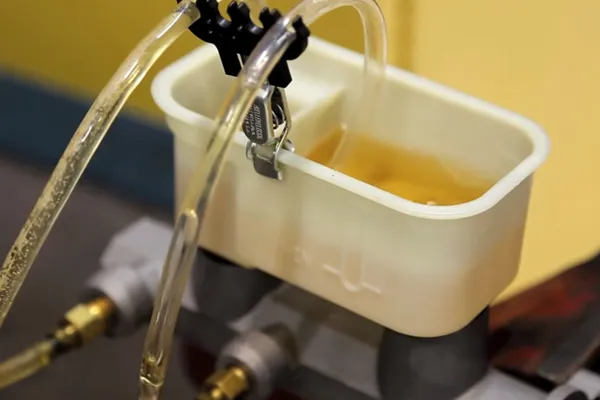
Yes, and this is a common outcome. Dry stroking during bleeding, skipped bench bleeding, contaminated fluid, and over-torqued line fittings can all damage a new unit or leave it unable to build pressure. The part is often the victim here, not the cause.
The mistakes that show up repeatedly
- No bench bleeding. Stroking a dry bore pushes the cups across an unlubricated surface. That alone can damage a new unit before it ever sees the road.
- Full-stroke bleeding on a dry bench. Even with fluid in the reservoir, aggressive full strokes on a dry bore score the wall.
- Reusing old fluid. Dirty fluid carries moisture and particles straight into the new bore.
- Skipping the ABS bleed. The pedal stays soft, the shop replaces the part again, and the cycle repeats.
- Over-torquing line fittings. This deforms the flare and creates a leak that looks exactly like a failed seal.
- Contaminated funnels and tools. A dirty top-up introduces the grit that later shows up as bore scoring.
What to tell your repair shop customers
The comeback is the real cost here. A new unit installed into a system that still has air, or was filled with the wrong fluid, produces the same complaint. The shop replaces the part a second time, and now nobody trusts the brand.
The practical message is simple: diagnose the failure mode first, then replace. Confirm the pedal symptom matches an internal leak. Check the fluid. Bleed the ABS unit properly. A few extra minutes on diagnosis is cheaper than a second warranty claim and a lost account.
Frequently Asked Questions
Why did my brake master cylinder leak after three months?
This question almost always points to fluid condition or fluid compatibility rather than normal wear. Swollen or softened cups on a clean bore suggest the wrong fluid was introduced. Dark, gritty fluid points to contamination. Ask what was poured into the reservoir before you accept the unit as defective.
Can a brake master cylinder fail without leaking?
Yes. An internal bypass leaks fluid past the cups inside the bore, so nothing appears outside the unit. The symptom is a pedal that sinks slowly while held at a stop with no visible fluid loss. This is the case where a bench test is the only reliable way to confirm the diagnosis.
How can I tell an internal leak from air in the system?
Air produces a spongy pedal that firms up after pumping, then fades again. An internal leak produces a pedal that sinks steadily while held, regardless of pumping. If the pedal improved before a brake service and went soft right after, suspect air first and re-bleed before condemning the part.
How long should a brake master cylinder last?
There is no fixed lifespan, and I would be careful with anyone who quotes one. Fluid condition, bleeding quality, and installation practice influence service life more than the calendar does. A well-maintained system with regular fluid changes gives the unit the best chance of a long, uneventful life.
Should the brake fluid be replaced at the same time?
Yes, in my view. Installing a new unit into old, moisture-heavy fluid puts fresh cups straight into a corrosive environment. Replacing the fluid at the same time is inexpensive, and it removes the most common reason a replacement fails the same way as the original.
Conclusion
A brake master cylinder rarely fails for one tidy reason. Corroded bores from tired fluid, air left in the ABS unit, external leaks at fittings and grommets, installation errors, and genuine manufacturing defects each leave a different trail. Read the evidence in order — leakage, fluid, bore, cups — and the responsible party usually becomes obvious. That is what protects you from wrong-part returns, freight loss, and the repair shop comeback that damages your reputation more than any single bad unit.
If you are triaging master cylinder claims across a large range of Japanese, Korean, European, and American vehicles, our team at GDST is happy to talk through what we see in returned units and how our hydraulic parts are built and inspected. Reach out and we will work through the specifics with you.