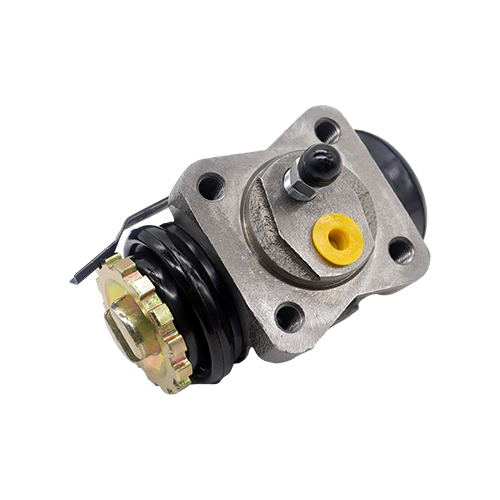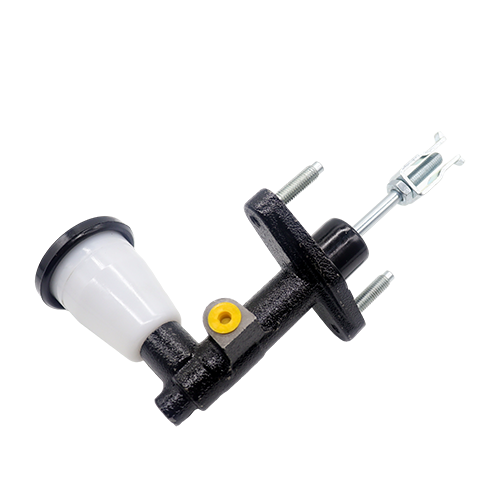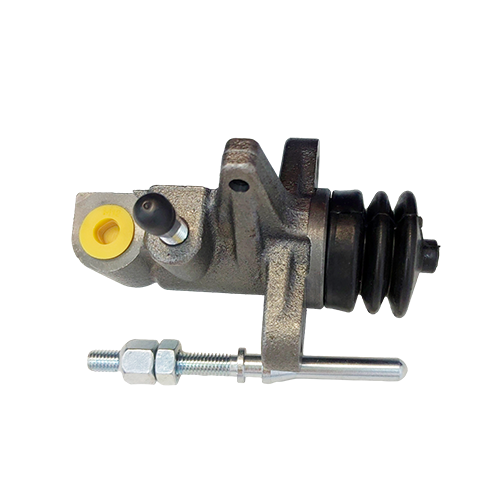
A brake wheel cylinder is a small hydraulic part, but when it starts to leak, the whole drum brake stops behaving the way the driver expects. I speak with importers every week who order by photo instead of by bore size and side placement, then lose days to returns. Understanding this part properly protects both margin and reputation.
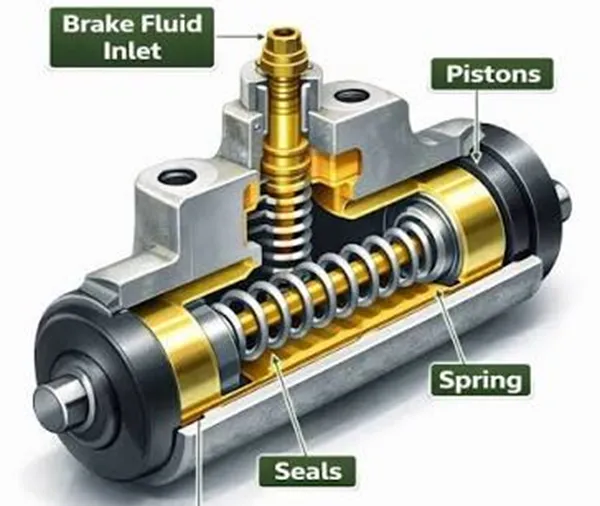
A brake wheel cylinder is a hydraulic actuator that sits inside a drum brake assembly. It turns fluid pressure from the master cylinder into outward movement of the brake shoes. Inside it you find a bore, two pistons, seals and dust boots. It is not a caliper, and it is not a master cylinder.
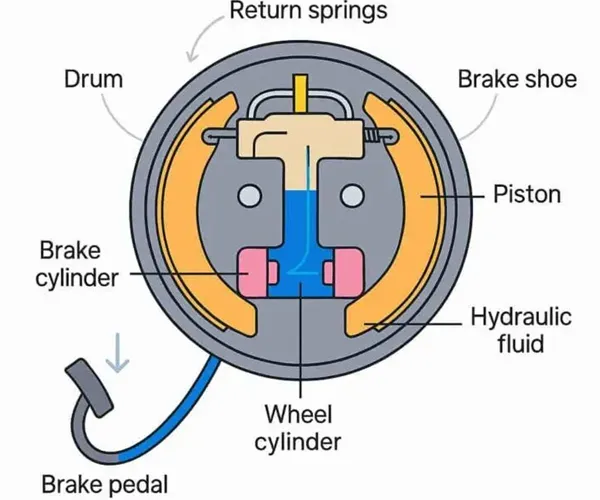
Before we talk about symptoms and cost, it helps to see where this part sits in the system and why its job is so specific. The sections below move from function, to comparison, to fitment — in the order buyers usually need them.
What Is a Brake Wheel Cylinder and What Does It Do?
People often use "wheel cylinder" and "caliper" as if they were the same thing. When a buyer quotes a part number built on that assumption, the wrong part ships and the return costs more than the sale. This part deserves a clearer definition.
A brake wheel cylinder is the actuator for a drum brake. Hydraulic pressure enters the cylinder and pushes two pistons apart. Those pistons push the brake shoes outward against the rotating drum. When pressure drops, a spring pulls the shoes back and the pistons retract.
Three jobs in one small casting
In our pre-sales conversations, I usually describe the wheel cylinder as doing three jobs at once:
- Sealing. It holds brake fluid under pressure without letting it escape past the pistons.
- Converting. It turns hydraulic pressure into linear mechanical force.
- Returning. It lets the pistons retract so the shoes release and the drum spins freely.
What is inside a brake wheel cylinder?
- Cylinder body — cast iron on many applications, aluminium on others.
- Bore — the machined internal surface the pistons ride on.
- Two pistons — one at each end in a double-acting design.
- Piston seals, or cups — the rubber parts that hold pressure.
- Dust boots — they keep dust, water and road salt away from the bore.
- Bleeder screw — it removes air from the system after installation.
- Return springs and expander — they help the shoes and pistons return.
Drum brakes and disc brakes split the work
Disc brakes use a caliper. Drum brakes use a wheel cylinder. That is the simplest way to divide the two, and confusing them is the most common knowledge gap behind this search.
You still find drum brakes in plenty of places: the rear axle of light commercial vehicles and trucks, many Japanese and Korean pickups, older passenger cars, and cost-sensitive economy models. Even today, the wheel cylinder stays a high-turnover aftermarket item in many regions.
How Is a Brake Wheel Cylinder Different from a Caliper or a Master Cylinder?
New buyers sometimes send a photo of a caliper and ask for a wheel cylinder price. It is an easy mistake to make. The fix is to look at each part by its job rather than its shape.
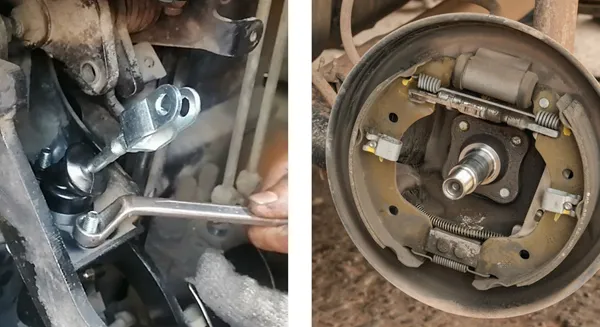
A master cylinder creates pressure at the pedal. A caliper clamps a disc brake pad. A wheel cylinder pushes drum brake shoes. They sit at three different points in one hydraulic circuit, and they are not interchangeable.
Where each part sits
| Part | Brake type | Main job | Location |
|---|---|---|---|
| Master cylinder | Drum and disc | Creates hydraulic pressure from pedal force | Engine bay / firewall |
| Caliper | Disc only | Clamps the pads onto the rotor | At the wheel |
| Wheel cylinder | Drum only | Pushes the shoes outward into the drum | At the wheel |
Why this matters when you quote
- One vehicle can have disc brakes at the front and drum brakes at the rear, so a single model may need a caliper for one axle and a wheel cylinder for the other.
- Some trucks use two wheel cylinders per rear wheel. Others use a single double-acting cylinder.
- Brake configuration can change within a model year or between trim levels, so confirm by axle and build data rather than model name alone.
From the factory side, this explains why we keep wheel cylinders and calipers on separate production and inspection lines. The machining steps, the seals and the inspection criteria differ. Based on general production logic, a supplier that treats them as one family usually has looser process control.
What Are the Symptoms of a Failing Brake Wheel Cylinder?
A customer emails and says the wheel cylinder is bad because the pedal feels soft. That conclusion is sometimes right, and sometimes wrong. I treat symptoms as signals that tell you what to check, and in what order.
Common brake wheel cylinder symptoms include fluid around the backing plate, a spongy or low pedal, pulling to one side under braking, uneven shoe wear, and a brake that drags or runs hot. Each of these can also come from another part of the same system.
What to check, in order
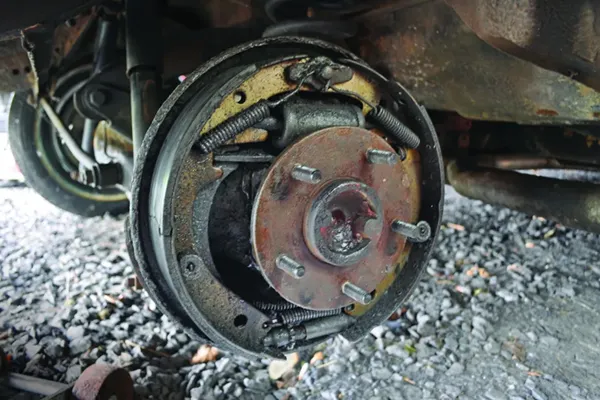
- Look for fluid first. Wet, dark fluid around the dust boot or on the backing plate is the clearest visual signal. Brake fluid damages paint, so a stained backing plate deserves a closer look.
- Check fluid level and condition. Dark or contaminated fluid changes how seals behave over time.
- Check pedal feel. A spongy pedal points to air or a pressure loss somewhere in the circuit. If bleeding fixes it only briefly, something is still losing pressure.
- Check the drum and shoes. Uneven or oily shoe wear suggests fluid has reached the friction surface.
- Check the hardware. Weak return springs, worn adjusters and poor shoe seating can copy the feel of a sticking cylinder.
- Check the installation. A piston pushed in at an angle, a twisted seal, or a bore wiped with the wrong fluid can cause an early comeback that has nothing to do with the part.
Why the order matters
In our after-sales claim feedback, a share of returned wheel cylinders come back with no fault found in the bore or the seals. The part was replaced, the symptom stayed, and the real cause sat elsewhere in the system. That is an expensive way to learn the difference.
A symptom is a signal to investigate, not a verdict on a part.
On anything safety-related, a qualified technician should make the final judgement.
How Do You Match the Right Brake Wheel Cylinder to a Vehicle?
Fitment is where most avoidable returns begin. Bore diameter, left or right placement, and axle position all have to be right before anyone quotes a part number. This is a selection decision, not a catalogue lookup.
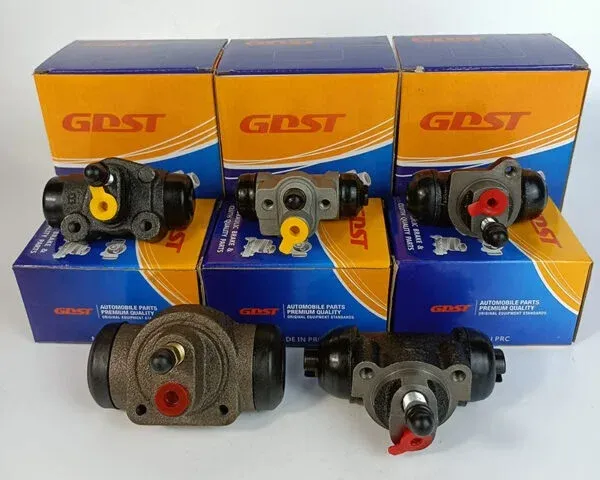
To match a brake wheel cylinder correctly, you need the vehicle make, model, year and engine, the axle position, the left or right side, and the required bore diameter. Some applications also need the mounting style and inlet port thread confirmed.
What to send your supplier
- Vehicle make, model, year and engine code
- Front or rear axle
- Left or right side, and whether the vehicle uses two cylinders per wheel
- Bore diameter in millimetres or inches
- A photo of the old part, including any casting number
- Any known OEM reference number
Why bore diameter is the first question
Bore size affects how much fluid volume the cylinder needs in order to move the shoes a given distance. A different bore changes pedal travel and braking balance at that wheel. Two cylinders can look identical from the outside and measure differently inside, so we confirm bore before quoting.
Why left and right are not always interchangeable
Many designs are handed. The bleeder screw and the inlet port sit in different positions on the left and the right. A cylinder fitted to the wrong side can leave the bleeder where it is hard to reach, which turns a routine bleed into a long afternoon.
A note on fitment claims and certificates
I am careful with the word "fits." Our range covers a wide spread of European, American, Japanese and Korean models, and we add new categories each year as new vehicles launch. Even so, fitment is model-specific and should be verified against vehicle data rather than assumed from a photo.
Our factory works to IATF16949 process requirements, and we back hydraulic parts with a one-year or 30,000 km warranty. From a buyer's side, documents like these are worth verifying directly — ask for the current certificate, its scope, and the inspection records behind it. A certificate opens a supplier conversation; it does not replace one.
What Does Brake Wheel Cylinder Replacement Really Cost?
The piece price is the first number buyers compare, and on its own it is the least useful. A cylinder that fails early turns into labour, freight, claims and lost trust. Total cost is the honest measure.
Brake wheel cylinder replacement cost has two parts. The first is the price of the part, which reflects material, bore finishing, seal quality and inspection. The second is the cost of getting it wrong: repeat labour, return freight, claim handling and reputational damage at workshop level.
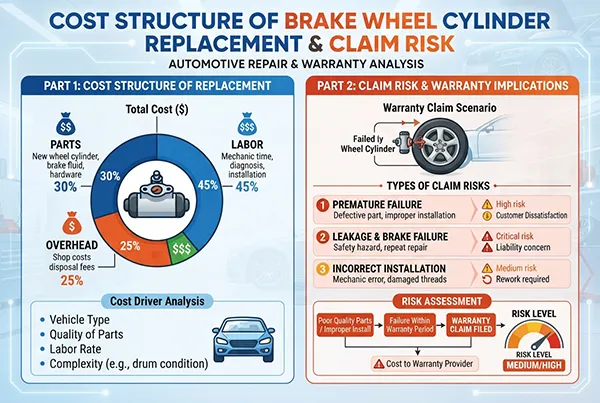
What actually drives the part price
- Body material. Cast iron and aluminium differ in weight, corrosion behaviour and machining cost. Cast iron is heavier and generally more stable under heat; aluminium is lighter.
- Bore surface finish. A bore finished to a controlled specification helps the seal hold pressure and last. Consistency here is a process control question more than a material question.
- Surface treatment. Plating or coating affects corrosion resistance, which matters most in coastal and winter-salt markets.
- Seal compound. Fluid compatibility, temperature range and resistance to swelling depend on the compound used. This is a common place to reduce cost quietly.
- Tolerances and inspection. Tighter tolerances and pressure testing add cost at the factory. They also remove cost downstream.
- Packaging. Protective caps and moisture barriers matter for a hydraulic part that may sit in a warehouse for months.
Where the hidden costs live
- Comebacks. An early failure consumes a technician's time twice — once to fit, once to replace.
- Claim handling. Return freight, admin time and credit processing.
- Inventory risk. Inconsistent parts confuse a catalogue, and narrow coverage ties up cash.
- Reputation. This one is hardest to price. A workshop that fits one faulty cylinder tends to distrust a whole category, and it tells other workshops.
When a quote looks unusually low, I ask what was changed to get there. In our experience, the answer is usually one of the items above. A part that is repeatable batch to batch is cheaper to sell than a part that is merely cheap to buy.
Frequently Asked Questions
How long does a brake wheel cylinder last?
There is no fixed lifespan. Service life depends on fluid condition, driving conditions, dust and moisture exposure, and how often the brakes are bled. In our after-sales feedback, cylinders in damp or salt-heavy regions tend to show leaks sooner.
Can I replace just one brake wheel cylinder?
Technically yes, but many technicians replace both sides on the same axle together. Braking force should stay balanced left to right, and a cylinder that has aged on one side has usually aged on the other. Follow the manufacturer's guidance.
Is a leaking brake wheel cylinder dangerous?
A leaking cylinder can reduce braking performance and let air into the hydraulic circuit, which makes the pedal feel soft or low. Brake fluid can also contaminate the shoes and reduce friction. If you suspect a leak, have the vehicle inspected before driving further.
What usually causes a brake wheel cylinder to fail?
The most common pattern we see is seal degradation over time, often linked to old or contaminated brake fluid, moisture in the system, or corrosion inside the bore. Installation errors and worn return hardware can also shorten service life.
Conclusion
A brake wheel cylinder is a small part with a specific job: turning hydraulic pressure into shoe movement inside a drum brake. Its symptoms overlap with other problems, its fitment depends on bore, side and axle, and its real cost includes every claim and comeback it prevents or causes. For importers, the smart question is not only "what does a brake wheel cylinder cost," but "which supplier makes it the same way every batch." Send me your target vehicle list at GDST Auto Parts, and I will help you build the category properly — bore options, model coverage and IATF16949 documentation included.